She was nearly 40 and it felt like a lifetime ago that she had driven up the farm road. The smell of coming home still lingered in the air; of eucalyptus trees, pine and wattle. It felt familiar and the memories were flooding in as if it were just yesterday. So much had happened here.
It’s a peculiar feeling of choosing to go back to a place that holds so many memories, a place that represents your childhood; a sacred place because of how it became such a significant part of your identity and how the events that unfolded there would shape the rest of your life.
There is almost an expectation of returning to a place like this, that it should remain unchanged as it has in your mind; how the farmhouse walls stand solid, how the garden is abundant with fruit and flowers, how the smell of home cooked food wafts from your mother’s kitchen on a Friday as you return home from boarding school, how your brother kick starts his new motorbike and disappears down the road in a cloud of dust and how your father steps out of his vehicle, evidently battered by another long week in the workshop and shouts, ‘Come on Jene, let’s go fishing.’
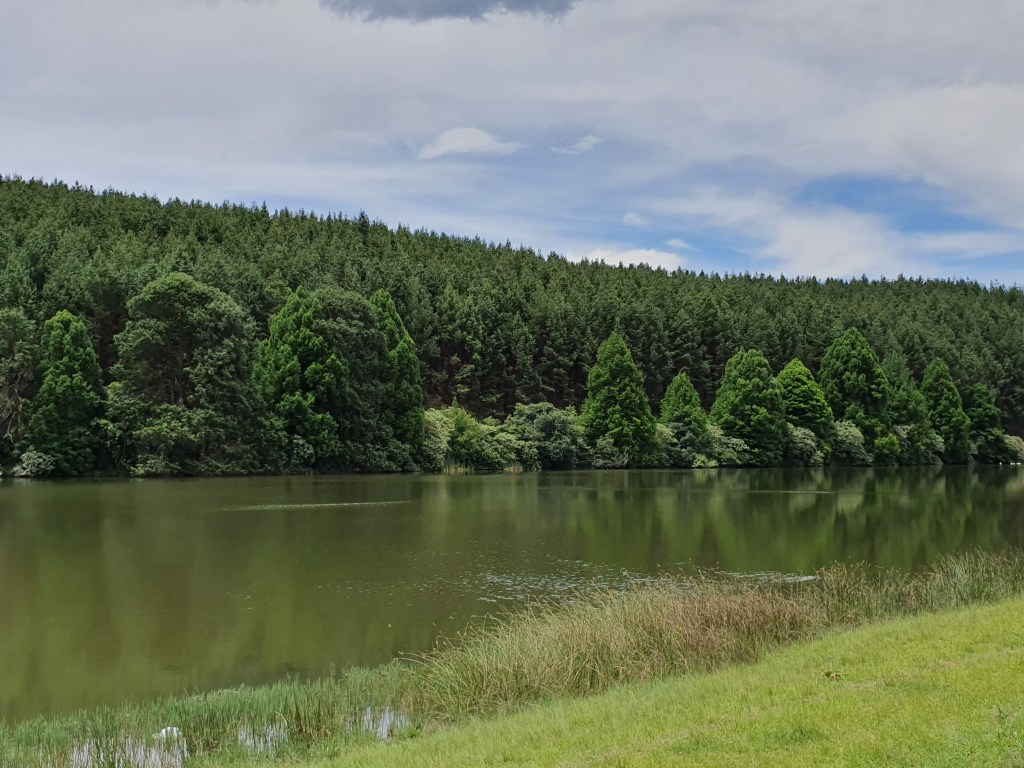
It had been years since Jene had been back to the area that she grew up in and even more years since she had returned to her childhood home and back to the place of the accident. Jene and her partner’s children had driven down to KwaZulu-Natal from Johannesburg to stay with her oldest and dearest school friend, Melinda. She wanted to give her partners young sons a taste of farm life and what it was like to grow up on a forestry estate in the lush KwaZulu-Natal Midlands in a small close-knit farming community. But most of all, Jene needed closure. When she was 15 years old, the life she knew changed forever in a matter of moments and recently she had been thinking about this time and place a lot and of the people who had so generously and lovingly supported her throughout those challenging, life changing years. Though she was not stuck, she wanted to immerse herself in these memories, get close to them, love them and feel the gratitude for everything that is because of what was. She’d go back to Natal for a week and in that time, she’d return to her family homestead and to the very place that she was found face down, falling in and out of consciousness and calling her mother’s name.
Jene sat in the passenger seat and Melinda drove. It didn’t happen often, but that day even Melinda was quiet! They’d decided to leave the children on Melinda’s farm while Melinda and her returned to Colbeck Estate for the first time and for the last time.
They were almost at the top of the hill and very close to the homestead’s entrance. Jene’s anticipation to be back at her childhood home increased with every landmark that they passed. The avenue of old Blue Gum trees stood tall, alluding to the assumption that a place as significant as this, that holds so much history and at one time, so much life – would go unchanged and defy the very passage of time. That it would always be as you remembered.
But it was not like this. Instead Jene returned ‘home,’ to find nothing. That everything that was still so vivid in her mind, no longer exists. Not even a brick. The only thing that remained from her childhood was her favourite tree – a solitary Redwood tree, as magnificent as she had always remembered it.
It was an unusual Redwood tree. Instead of having one solid trunk like most Redwoods, this tree stemmed five branches from the roots. These five branches grew in solidarity, supporting each other through the seasons of life, surviving the weight of heavy snowfall, of wind, of floods and drought. It was a tree that stood the test of time and it was the only tangible thing left of Jene’s past.

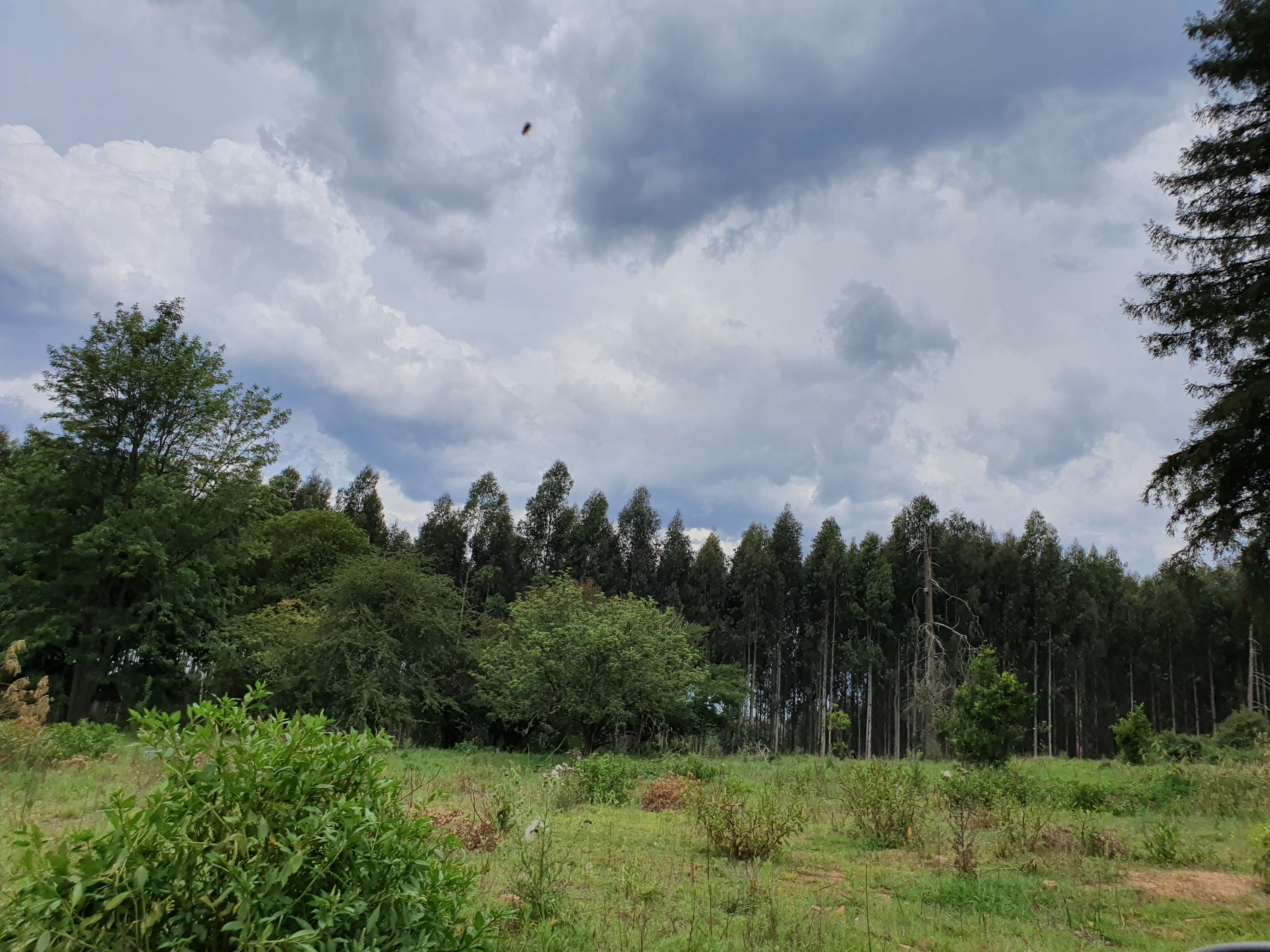
She sat on what was the foundation of her childhood home, a patchy green piece of land dotted with brambles and tufts of grass. For a few long moments, the emptiness of the space muted her. It looked like an insignificant field of weeds and grass, seemingly mocking the immensity of her return and of everything that had happened here. Though it was still as beautiful as ever, there was nothing left of her past, other than the memories she held in her head and of course, there was still the great old Redwood.
It swayed and it creaked in the breeze as it always had. Like an old friend, it reminded her of what ‘still is’ and importantly, what came because of ‘what was and because of what happened.’
For a few blissful, heartfelt hours, Jene ‘danced’ in an open field with ‘then and now,’ and everything that she has become.
“Your journey has moulded you for your greater good, and it was exactly what it needed to be. Don’t think you’ve lost time. There is no short-cutting to life. It took each and every situation you have encountered to bring you to the now. And now is right on time.” – Asha Tyson
RosieGoes©2022

 Rosie Goes
You must be logged in to post a comment.