Bombs are falling, but love is strong

It was a Summer’s morning in 1963 in the rural region of Donetsk when Alexander took Tatiana’s hand for the first time. He had walked down this road with her and carried her schoolbag since they were 14 years old, through fields of sunflowers, grasslands speckled with wild flowers and a patchwork of green pastures and crops. It was their time to be together; a time to be side by side and to talk and share their news before they reached the fork in the road and would part ways. Alexander attended the Ukrainian language school and Tatiana attended the Russian language school, but for the most part, they shared a road and this is where their love grew into something as solid as the road they walked on.

That early morning, everything was still. The sunflowers on either side of them leaned in, with their sunlit faces turned towards them, listening and watching with curiosity as love unfolded. Alexander had just turned 18 years old. He’d known since the beginning that he wanted to marry Tatiana and he was finally old enough to do so. Alexander took Tatiana’s hand and looked her in the eyes, then said, “I love you, and I want to share every morning with you.”

That day, they walked hand in hand. The birds erupted into joyful song, the breeze picked up and the sunflowers swayed in unison, beaming golden light onto young lovers. Alexander and Tatiana walked together; again and again and again and even now, when their road is wounded with gaping holes, bombed and obliterated and no longer exists.

Alexander and Tatiana have been married for 60 years now. It is their 60th anniversary this month and they are spending it alone in a residence for internally displaced Ukrainians, thousands of miles from their children and grandchildren. Two of their children have escaped the war and have managed to get to Europe. Their youngest daughter and her husband remain in the East of Ukraine, running a small business and attempting to carry on with life despite the danger all around them. I joked with Alexander and Tatiana that they are still young and in love, not even 80 yet and Tatiana said “yes, we felt that too until the 24th of February. We felt young, like we have a whole new chapter ahead of us, but we don’t feel that anymore.”

Alexander and Tatiana sat side by side on two school chairs. Their room is a small classroom that has been converted into a temporary residence with mattresses and the few belongings they were able to bring with them. This is not how they envisioned this chapter of their life. They should have been in their new apartment by now, sharing meals with their children and grandchildren and enjoying their retirement.

Alexander and Tatiana

Alexander and Tatiana were hard workers. Both of them had done various work for the coal mines, a life time of using their hands and bodies to make a living. They’d spent their money carefully, taking pride in being able to give their children a good education and to provide for them. When the children had grown up and left ‘home’ to start their own families, Alexander and Tatiana continued to work in the mines and to save their money for retirement. They planned to buy an apartment in Donetsk and to move closer to their family for their retirement years but would need to save up a considerable amount of money to be able to afford this. With calloused hands and tired joints, their needs for ‘retirement’ were simple; a good health, time to rest and to be surrounded by family.

Tatiana

At the beginning of the year, they’d put their small property on the market and had found a buyer. With this money as well as their saved-up money, they bought a new apartment in Donetsk, close to the home of one of their daughters, leaving them with enough money to have a comfortable retirement. It had always been such a solid plan and way of life, when consistency and discipline ‘pays off’ and a life time of hard work is rewarded with a comfortable, stress-free retirement.

But nothing about war is normal. On the 24th of February, the sale was approved and the ‘property documents’ were processed. Alexander and Tatiana were the proud new owners of an apartment in Donetsk. It was also the first day of war in a region that would soon be bombed with missiles, civilians would be gunned down, buildings and roads would be destroyed and Russian invaders would move in, like parasites feeding off what is not theirs, tempted by everything their own country could never give them.

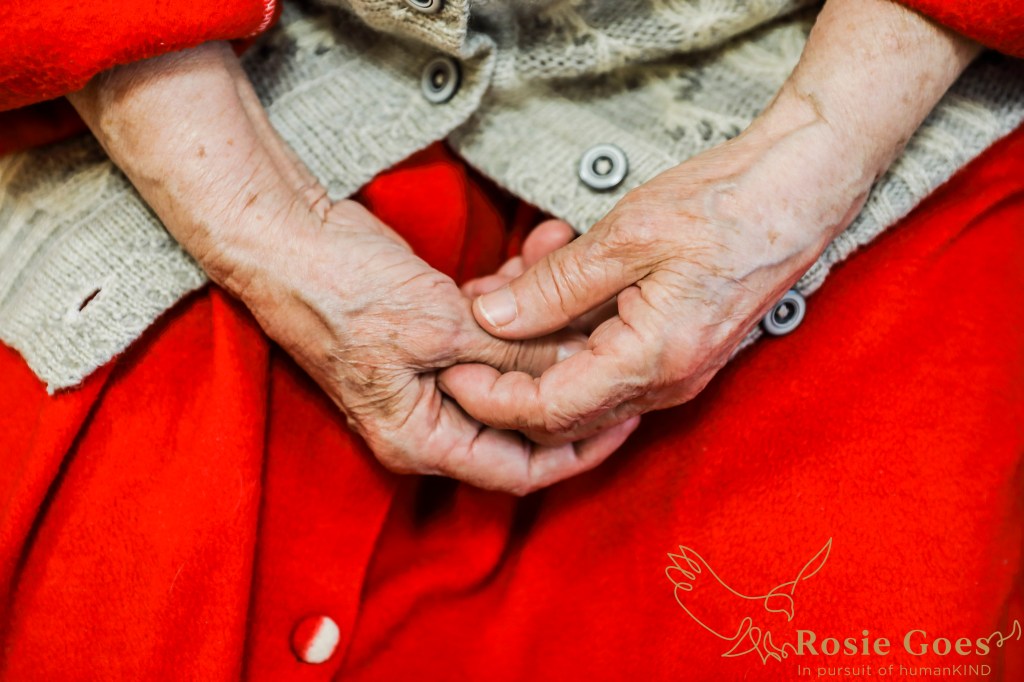
For the most part of this interview with Alexander and Tatiana, Tatiana had done most of the speaking. I watched them both, noticing the loving gestures between them, the way they remained side by side and the way Alexander watched his wife as she spoke, radiant with a deep love for her, his face wrinkled in a way that you know she’d made him smile many times before.

Tatiana spoke of how she wished they could return, how she’d never wish this on any country. Her eyes welled up with longing for the simple life that they had had, one that has been taken away by a man called Putin, a man who plays with the lives of millions, far beyond the borders of Ukraine. A man who claims the world as his battlefield with large supplies of ‘clout’ to threaten and control and an army of tin soldiers; expendable, blood-thirsty pawns in Putin’s bygone game.

Medicine bag

At the sight of his wife’s tears, Alexander stands up and his easy, happy demeanor drains from his body. His eyes become blurred with tears that are heavy with the emotion that he attempts to lock in the cage of his heart, escaping his control in a flood of anger and unbearable pain. He grabs hold of a large plastic bag full up of medicine and holds it up for me to see. He says, “This is all we have. After a life time of hard work, this is what we are left with – a bag of medicine to treat the symptoms of a sick man’s war.”

Alexander’s voice cracks with the injustice of this war, this stupid one-man’s war; pointless and brutal – a war that spews hatred and spreads like liquid poison, leaving a bloody trail of destruction for generations to come, on all sides.

After a few moments, Alexander stops talking about their loss and recomposes himself. He looks me in the eyes and says, ‘We cannot think about tomorrow. We can only think about today. Today we are safe, we have a roof over our head, we have food and we have each other. When bombs are falling, we cannot dream, we can only be here right now, in the company of those we love.’

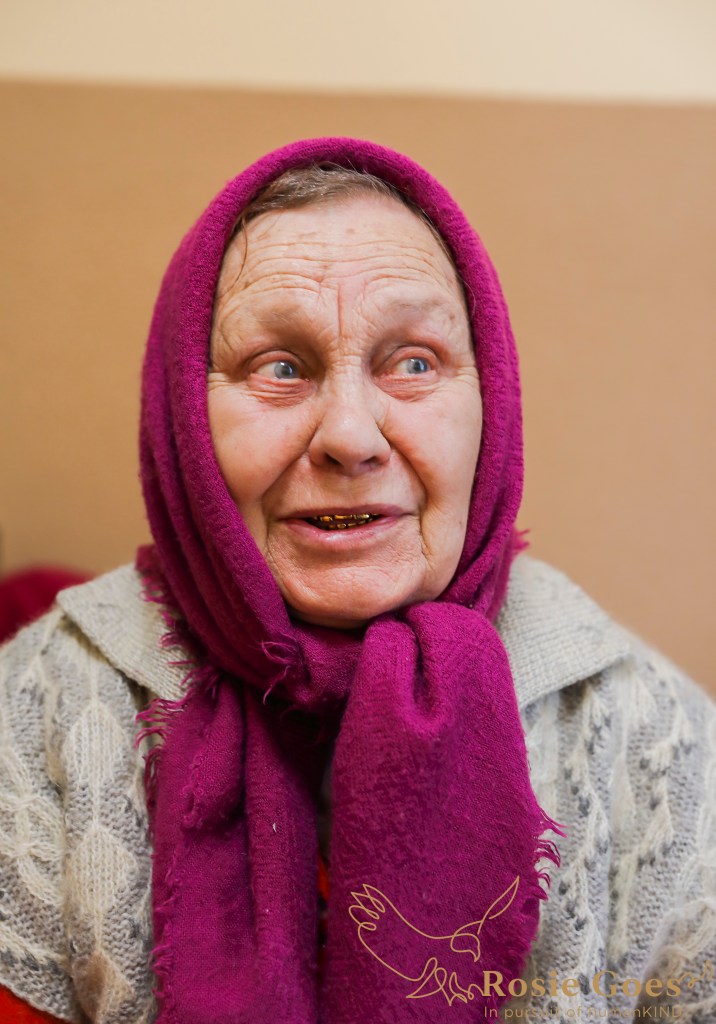
Alexander

Rosie Goes to Ukraine; The power of giving and receiving

Olena woke up to the sound of an explosion and the strange sensation of her bed shuddering. It was 5 oclock in the morning when the first missile hit. At first, she did not know what was happening, only that the walls of her apartment were shaking and the windows were vibrating so much that she thought they’d shatter at any moment.

Babooshka

Olena, her mother Olena and her grandmother Tatiana lived together in an apartment close to the Luhansk airport. It was one of the very first attacks by the Russian forces in Ukraine. There were no sirens warning civilians of a missile attack at this point but this would quickly change.

Day broke and after the first explosion, the missiles kept on coming. It was Spring and the usual blue skies that come after a long and cold winter, promising weekends in the park, music, summer picnics and gatherings with friends were grey with plumes of black smoke. The birds that usually sing were quiet, taking refuge from the skies. And tenants poured out of their apartments into the corridors, not to go to work but to seek answers from equally confused and frightened neighbors.

The city of Luhansk was under attack.

Olena and her mother Olena needed to make a decision. Should they stay or go? Should they take the risk and stay by continuing to work and to make a much-needed living, seeking shelter from the bombs at their work place? Or should they do as their neighbours are doing and leave Luhansk by train and head west of the country.

It didn’t take them long to decide. Their elderly mother Tatiana could not be left alone in the apartment building at a time like this. She has a hearing problem and cannot hear any sirens and she would not be able to move fast enough to the bomb shelter should there be a siren ‘warning’ them of an approaching missile. A siren is a ‘warning’ that there is a missile making its way in your direction and that it could hit its target any time between 5 and 20 minutes from the time it goes off.

With this in mind, they felt they did not have much choice but to pack a small bag with their important documents and take the train west. The three of them were fortunate in that a group of volunteers were operating in their area and could assist them with getting Tatiana to the train station and onto the train. This has been a big problem in Ukraine in that many of the people who have stayed in the targeted areas have stayed not because they want to, but because they simply do not have the ability to leave. Many of these vulnerable people who have stayed are either staying to continue earning a living because they do not have the financial means to leave, or they are the ‘elderly or disabled’ and do not have the ability to move. And sometimes, it’s simply that the thought of ‘upping and leaving’ what they know, is equally frightening as the missiles streaking across the skies.

“There is no flag large enough to cover the shame of killing innocent people.”
― Howard Zinn

When I asked Olena about her journey and what her experience has been up until ‘now,’ her eyes filled up with tears. She spoke about the immense gratitude she has felt during this time, how they have been given a room for the three of them to live in with mattresses, blankets, clothing, toiletries, food and even access to a therapist – everything they could possibly need in a crisis like this. She told me how deeply moved they have been by the abundant flow of kindness and thoughtfulness shown by strangers in their time of need and when their future feels so uncertain. How this ‘kindness’ they have experienced is food for the soul and is passed on from one person to another; a chain reaction that connects, sustains and builds unity and strength for a population of people in crisis.

For me, this has been one of the most powerful lessons I have learned so far while being in Ukraine. There is a culture of kindness and respect here. It runs through the veins of Ukrainians, of volunteers, of people on the other side of the world who care and who have donated everything from clothes, to wheel chairs, to nappies and to food, to the stranger at the train station taking Tatiana’s hand and helping her on board. This kindness is the life blood that flows and that keeps Ukrainians strong and alive.

I’m learning that despite the worst of humanity being in the spotlight, it is also a time when we see humanity at its best and how powerful it is, how it prevails. How what we give out, counts. How our actions are a ‘ripple’ that go on and on, that feeds into a culture and that becomes our experience.

I looked around at the three women’s new living space and how they have made a small home away from home with the few things they brought with them and with the generous donations they have received from the global community. I notice a family picture frame and a bowl of apples on the table – a picture of normality in a very unusual setting. I notice a plastic blue toy cow placed on the shelf, taking its position next to the family photo frame and a religious picture that they had cut out from a magazine. These 3 objects represent everything that truly matters to them right now. Their family, their beliefs and ‘love’ shown in the way of kindness and giving.

3 generations

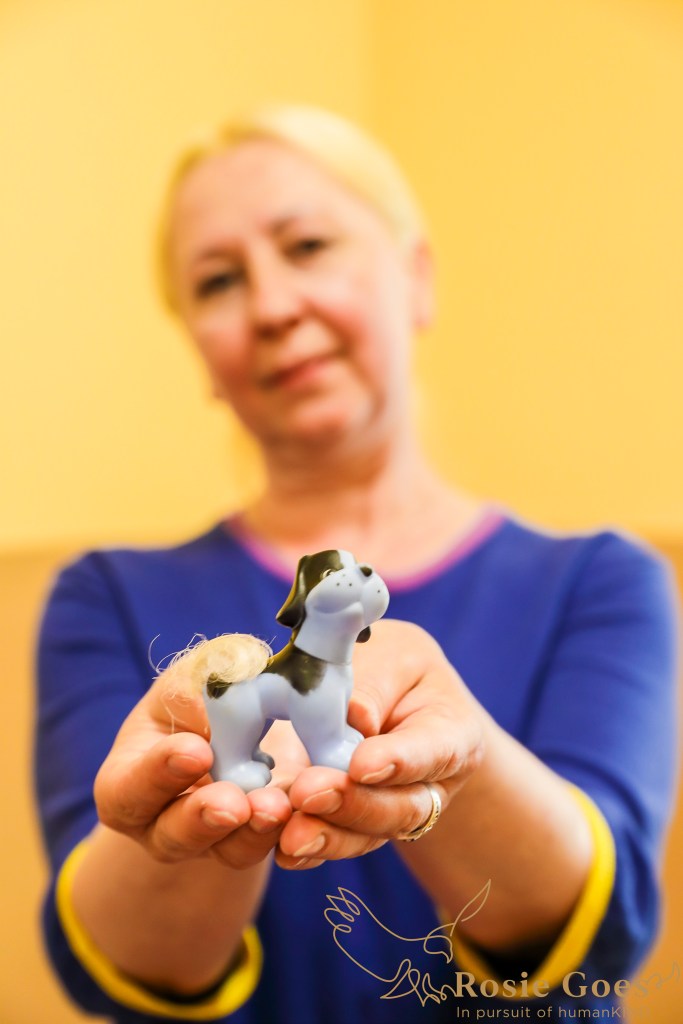
I asked Olena about the toy cow and she took it from the shelf and explained that it was a gift from a stranger. That a volunteer had given it to her to cheer her up. And then she passed it to me and insisted I take it with me to remember this time. She then picked up all the apples in the apple bowl and a chocolate croissant and gave that to me too.

This was my first experience with the Ukrainians and I was deeply moved. Initially I felt uncomfortable about receiving this gift as I felt they needed it more than I did. But my interpreter thankfully insisted I take it, and I did. She explained to me that this is what the Ukrainians do, they show their appreciation by ‘gifting’ you however they can. How ‘gifting’ is their way of saying, ‘you matter’ and a way for them to connect with you.

Right now, the blue cow sits on my desk in front of me and I think about ‘giving and receiving.’ How it is the simple but powerful act of saying ‘you matter,’ and how receiving is also the ‘act’ of giving someone a voice, of accepting and receiving what they want to say or how they want you to feel. I have learned how the act of ‘giving and receiving’ goes hand in hand and creates an intangible ‘ripple’ that goes from one person to the next, until it becomes a torrent – unstoppable and stronger than what is unfolding on the ground. The beauty of ‘giving and receiving’ is not about the gift itself, but rather the love and intention behind it. How ‘giving and receiving’ is a mutual exchange of love.

I see this in Ukraine; how a culture starts with you and me and how an act of kindness goes from one person to another, rippling further than we will ever get to see. I see how this culture of ‘giving and receiving’ brings people together, creating strength and unity – how an intangible act of kindness is more powerful than any ‘missile’ can be ever be.

Giving and receiving – an exchange of love

Lianne Ashton is the author and photographer for Rosie Goes. She is a freelance photographer and writer currently based in Ukraine and neighbouring countries.