This week has been a whirlwind of emotions for me with ongoing challenges of ‘acceptance.’ And I have many unanswered questions in the way of ‘surrendering to what is before we can move forward.’ This is a journey that often involves taking one step at a time and that comes with many layers, different circumstances, a lot of self-awareness and the willingness to look at something from a different perspective when you cannot change a situation.
A few weeks ago, because of my own experience, it became clear to me that ‘acceptance’ is not about ‘wanting’ something but rather ‘letting go’ of something or of a desired outcome for there to be flow and to go forward. By holding onto it and not ‘letting go’ keeps you in a state of disharmony and you get stuck. You are perpetually angry, frustrated depressed and/or anxious and it feels like you are head bashing the same brick wall over and over again in hope of breaking it down. But the wall never breaks. It still stands and the only outcome is you – black, blue and broken. Acceptance is not about the ‘other’ but rather, it’s about honouring and loving yourself enough not to fight to the death. (Of yourself) If you are unhappy about your situation, be brave and change it. But if you absolutely cannot change it and your intentions are true and from a place of love, then you must accept it and instead change your perspective in a way that empowers you and allows you to go forward and walk through the story so that there is a different ending. One of the biggest lessons I have learned through Jene Frost’s story is that acceptance of a situation is not ‘giving up’ but rather focusing on what you ‘can do’ and not what you ‘can’t do.’
But this is where I get stuck. Sometimes it does not always feel that simple. I think of the Ukrainians and how many of them have been forced to flee, not because they want to but because they fear death if they don’t. They accept the situation and do what they must do to keep safe. But how does one handle the unfairness of a situation like this, the anger and grief that comes with the process of letting go to move forward? Of losing everything you care about, of a way of life, of your rights, of what or who you love most? How does one accept a situation that is so unfair and so abusive? And worse, when your voice does not matter or there is no-one willing to listen, how do you accept not being heard to move forward? I would like to know, because I don’t.
This week my heart goes out to a father. A good father and a good man. A man so big and full of love that children gravitate towards him. They bask in his love and in his gentle and accepting presence. They get to be who they are and loved for who they are without there being any consequence. This week, my heart goes out to a father who has called his children every single week for over a year and who has spoken to them no more than a small handful of times. This week, my heart goes out to a father who loves unconditionally. This week my heart goes out to all the parents who have been alienated from their children and who are standing on the edge wondering how they can possibly go on without their children and the human beings they love most in this world. This week, my heart goes out to the children who are being intentionally starved of this love. This week I am struggling with acceptance. Because I don’t know how one could possibly accept not being part of your children’s life. I don’t know how I would do this if I was in his shoes.
“It is not important what is said, what is important is what is heard.” ― Jeffrey Fry
When I initially contacted Jene to ask her if she would be willing to share her story with me, I knew it would be a story of ‘acceptance.’ I knew that her story involved ‘surrendering to what is before she could go forward.’ I knew that she had done this because of how far she has come since that life changing day. But I had thought it would be a different story to what it is. I imagined myself in her shoes and what it must have been like to lose the life she knew. I imagined that the drastic change of life and how it’s far-reaching implications would have been difficult to accept – that there would have been a long internal struggle of acceptance before she could start moving forward with her new ‘normal.’ But I was wrong. This is the phenomenal story of Jene Frost, of a young woman who saw no choice but to accept her new circumstances, adapt and move on.
Sunday, 28th April 1996
It was a special occasion. ‘Oupa’ and his sister had come to visit the family. It didn’t happen often because he lived in Pretoria – a full day’s drive from the lush green forestry estate in KwaZulu-Natal. On this special occasion there was only one obvious way to celebrate: To braai.
To Braai is a South African food and social culture of cooking meat on a fire, usually in the company of good friends and family, doused with a few cold beers and spiced up with some braai banter. While the occasion is usually casual, cooking the actual meat is a very serious business and a responsibility not to be taken lightly. The meat you cook is your preference, but whatever meat it is you choose, there must be passion! There must be a lot of love and care and the goal must be ‘perfection.’
For Rob Frost, father of Jene and chief braai master, there was absolutely no question about what to braai, it had to be his famous Mozambican Piri Piri chicken.
The thing about preparing and cooking a good Mozambican Piri Piri chicken on the fire is that it takes time. There is simply no way to rush the chicken, lunch will almost always be served late.
First, one must marinade the chicken in all its spices, lemon and garlic overnight so that the entire bird is infused with flavour. Once the chicken has been marinated, it’s time to start the fire. The fire must be just right, not too hot and not too cold. At no point can the chicken be left unattended. The cook must be there from beginning to end, basting the chicken over and over again and applying the marinade until there is nothing left. Then finally, you crisp it up and your result is the most succulent, tender piri piri chicken that is bursting with flavour inside and out and the best you will ever taste. This is a chicken that you will have to wait for.
But Jene was not one to wait around. At the age of fifteen, Jene could think of far more exciting ways to pass time than to sit around a fire watching a chicken cook. Besides, her friend Donna from the next door farm was here too with her father and his partner Ann. The two girls had had about as much adult talk as their teenager selves could handle and the piri piri marinade packet was still half fill! Lunch would not be ready for at least another hour. They needed some fun, some speed and some adventure to pass the time. “Let’s go to the dam Donna,” said Jene, and Donna agreed. Rob overheard the conversation between the two girls and reminded them of the rule. “Girls, No helmet, no ride.”
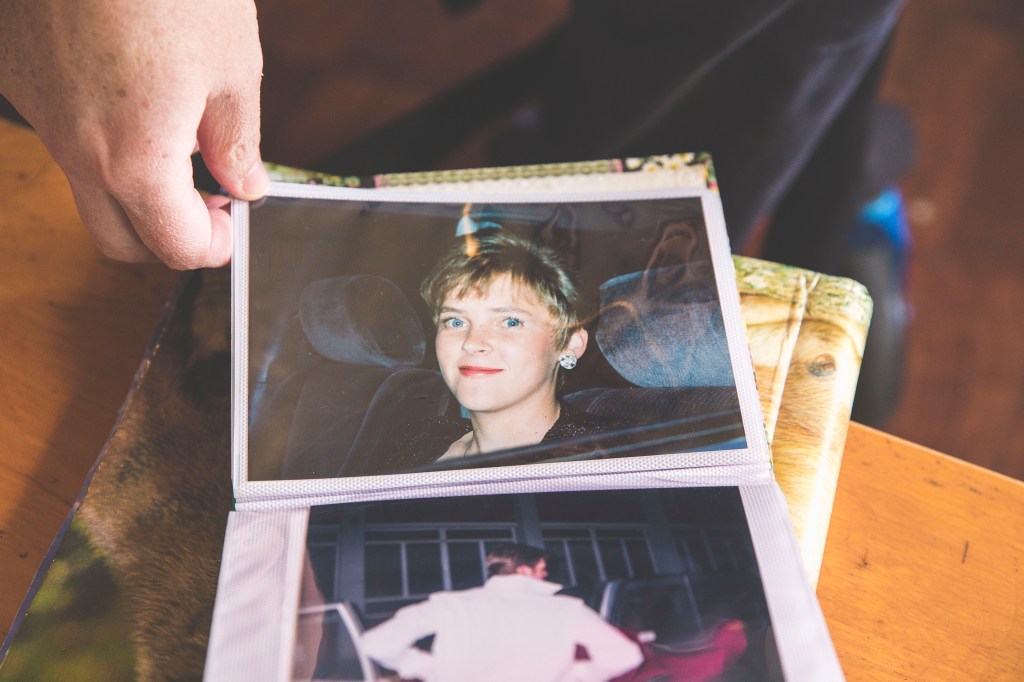
Jene Frost, 15 years old
‘Zane,’ Jene’s older brother, had a motorbike and had just got a brand new helmet. He was quite happy to share his bike and helmets with his younger sister and her friend, they were good like that. Since Jene had already done a few laps around the garden earlier on, it was Donna’s turn to drive. Though she had not ridden this bike before, riding motorbikes was nothing new for these two farm girls and ‘today’ was just another one of those typical farm days.
15 minutes later, the girls were already at the dam. ‘Now what,’ said Jene? They knew the piri piri chicken still had a while to go and there was no reason for them to rush back. This was the beauty of being a teenager living on a farm at that time. There were no tablets or screen gadgets, no cell phones and no hours and hours of Netflix. It was just good old farm fun and a freedom that most teenagers can only dream of experiencing. As with all other days, it was not so much about where to go, but rather the doing of it. It was not so much about the dam, but rather the feeling of independence and freedom that ‘going to’ the dam gave them. But now that they were at the dam, they needed to go somewhere else and though it was not about the ‘where,’ the ‘where’ still needed to have some sort of significance or purpose. A new gravel road was being built on the other side of the dam. Jene and her brother had investigated it the day before and had had a small accident when they hit a patch of loose gravel and the wheel had ‘washed out.’ But Donna had not been there, and exploring ‘a new road’ ticked the box of where to go next for them both to continue feeling the pure joy and exhilaration of going somewhere on a motorbike, on their own.
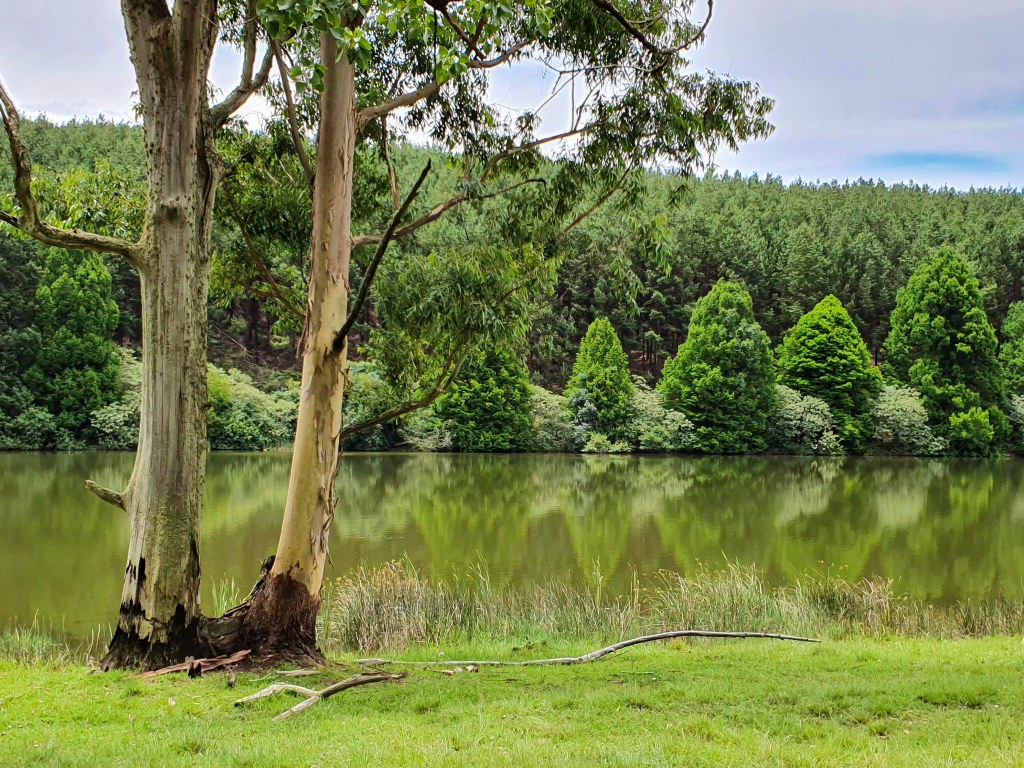
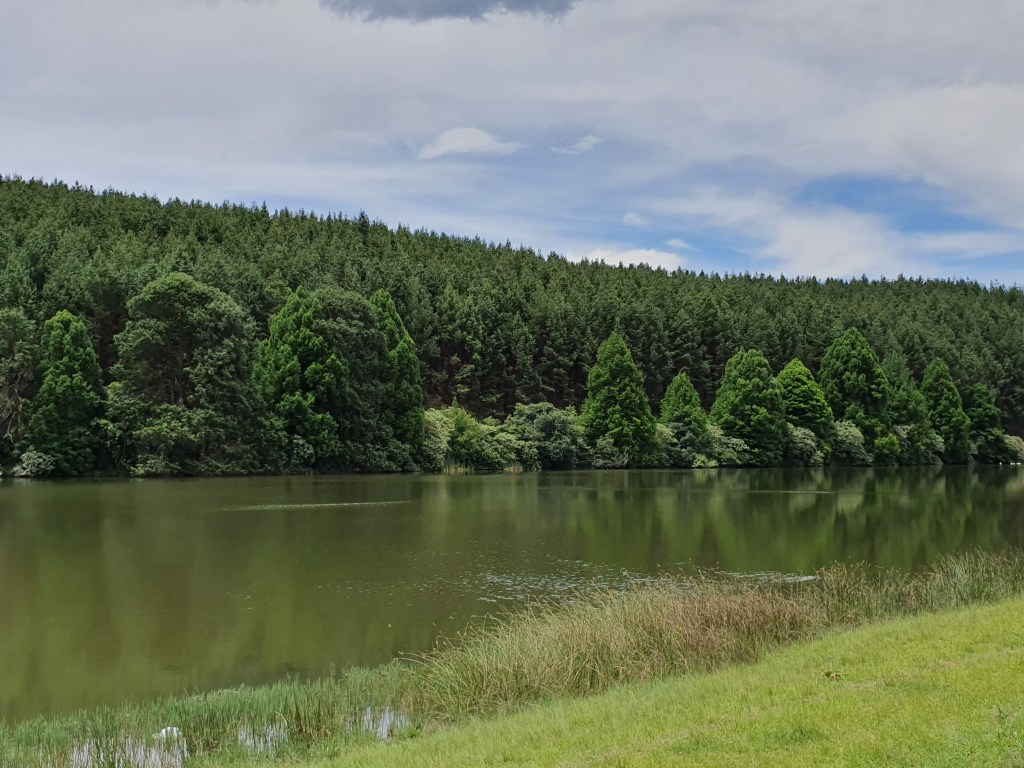
Dam on Colbeck Estate
The last memory that Jene has of being on the motorbike was her shouting above the noise of the engine, ‘watch out for the loose gravel on the corner.’ Seconds later, they were both unconscious. Neither girl remembers what happened. The only certainty is that on that day many things happened for them to get to where they were, to a place that they took a turn down a new road.
Jene woke up flat on her stomach with her head to the side and with the motorbike on her legs. She noticed that Donna was next to her, unconscious or simply not moving and that there were trees all around them. It was confusing; it felt like she was having a bad dream and was drifting in and out of sleep.
In the meanwhile, the piri piri chicken was crisped up and ready to eat. By then everyone had been seduced by the aromas of roasting meat for a few hours and were hungry but the girls were not back yet. It was unusual. Especially since ‘Mozambican piri piri chicken’ was a family favourite. There was no chance that Jene would have missed out on her portion of ‘crispy chicken wing,’ not for anyone!
For the most part, disappearing on the farm for a few hours was nothing unusual for Jene. She was an outdoor kid and was happiest fishing with her dad at the dam or being on the bike or doing something on the move. Her weeks and her weekends were always action-packed. During the week, Jene’s love of sport filled up her days. She’d start her day with a 10 kilometre run and she’d finish on the hockey field. At the age of fifteen sport, action and adventure had become her identity. Whatever day of the week it was, it was the joy of movement that made Jene feel most alive.
Teenager memories
The chicken was cold by now and with every passing minute and the gnawing feeling that something was not right, prompted the men to head out and to start looking for the girls. One hour passed, two hours passed and there was still no sign of them. In this time, the farming community had been alerted on the radio that Jene and Donna were missing and within a few minutes, the community was activated and a search party was in full force. The possibilities were endless, like trying to find a needle in a hay stack. Which road had they taken? Had they gone to visit another friend? Had they run out of fuel? Had they broken down? Had they ventured onto the tar road and had an accident? Had they been hijacked? Had they been taken? Were they safe? Were they alive?
Jene opened her eyes once again and the pine trees in the distance came back into focus. She could smell them and she could hear a trickle of water. She wondered how she was still having the same bad dream. Then she became aware of how her head and body ached and that she couldn’t move. She noticed how Donna was still there too, motionless. In between dipping in and out of consciousness, Jene started to realise that this was no dream and that they were in trouble. She did what any child would do when they are hurt and she cried for her mother before losing consciousness once again. Jene disappeared back into the depths of nothingness, hovering somewhere in no-man’s land, with neither a past, nor a future, as if her soul was taking a long and deep breath before it continued on with the next leg of its journey.
At the same moment that Jene called for her mother, an elderly African man was returning from Sunday church and was walking home on the remote farm road close to where the girls were lying. It was a desperate cry, one that did not fit the peaceful setting. It was a cry that pierced the gentle breeze and silenced the birds, a cry for help. He found the girls lying in a dry river bed, unconscious and in a very bad shape. Jene had landed on a concrete pipe and Donna had collided with a tree.
Jene and Donna’s accident site at Colbeck Estate in KwaZulu-Natal, South Africa
When Jene’s mother Tish and Ann (Donna’s father’s partner) saw the man running up the farm road, they knew it was about the girls. Breathless from running, he told them that he’d found the Mngani’s (children) and that they were in trouble. Together the three of them jumped in the vehicle and raced off to the accident site. Ann was a nurse and when she laid eyes on the girls, she immediately knew that it was very serious and potentially life threatening. She firmly instructed Tish not to move Jene and to return to the house and to call Dr Gardener (the local community doctor) and to call an ambulance too.
When someone in a farming community is in some type of distress or danger and the community is alerted, it’s quite extraordinary what happens next. They arrive in their dozens within minutes. Within minutes a signal is sent via telephone or radio and a community that is made up of individuals and personalities of all types, merges into one well-oiled co-operative machine with only one thing in mind. To do what is necessary to help, protect, support and fix. Dr Gardener was called and told that the girls had been in an accident. Within a couple of minutes of receiving the call, especially since it was on a weekend, he knew it was serious and was on his way. There were no questions asked other than the location.
Dr Gardener arrived and assessed the girls. He then crouched down to Jene’s level and pinched her hard. He continued to pinch her again and again all the way up her left side. Then he pinched her under her arm and she yelped in pain and shouted at him, “What the hell are you doing?” Dr Gardener apologised and told her that he won’t do it again. Then he pinched her on the right side, all the way up from the waist and finally under the arm. When he pinched her under the right arm, she got really cross with him, because he had done it again. Nothing more was said and there were no more pinches after that.
The girls were carefully put on trauma boards and loaded onto the ambulance. Tish and Ann would accompany them on the slow and agonising three hour journey to Pietermaritzburg. While Donna remained unconscious, Jene was physically and emotionally exhausted and all she wanted to do was sleep. It had felt like the longest day of her life and she was fed up with everyone fussing over her. She just wanted to be left alone and to be allowed to sleep and to have this hellish day over and done with.
“You can’t” said Ann in her most authoritative voice. “You cannot go to sleep Jene, I wont allow you to.” Despite everything that had happened that day, Jene still had enough strength and fire in her to be extremely annoyed at being told what she can and can’t do, especially after a day like this. But Ann was adamant. The risk of missing a brain injury such as a seizure or a weakness on one side of the body after experiencing a head injury was too great and not a risk anyone was prepared to take.
Ann threatened Jene with a ‘smack on the bum,’ if she fell asleep. And without much thought, Jene replied, “I don’t care, I won’t feel it.”
“Well then, I will pinch you on your ear,” said Ann
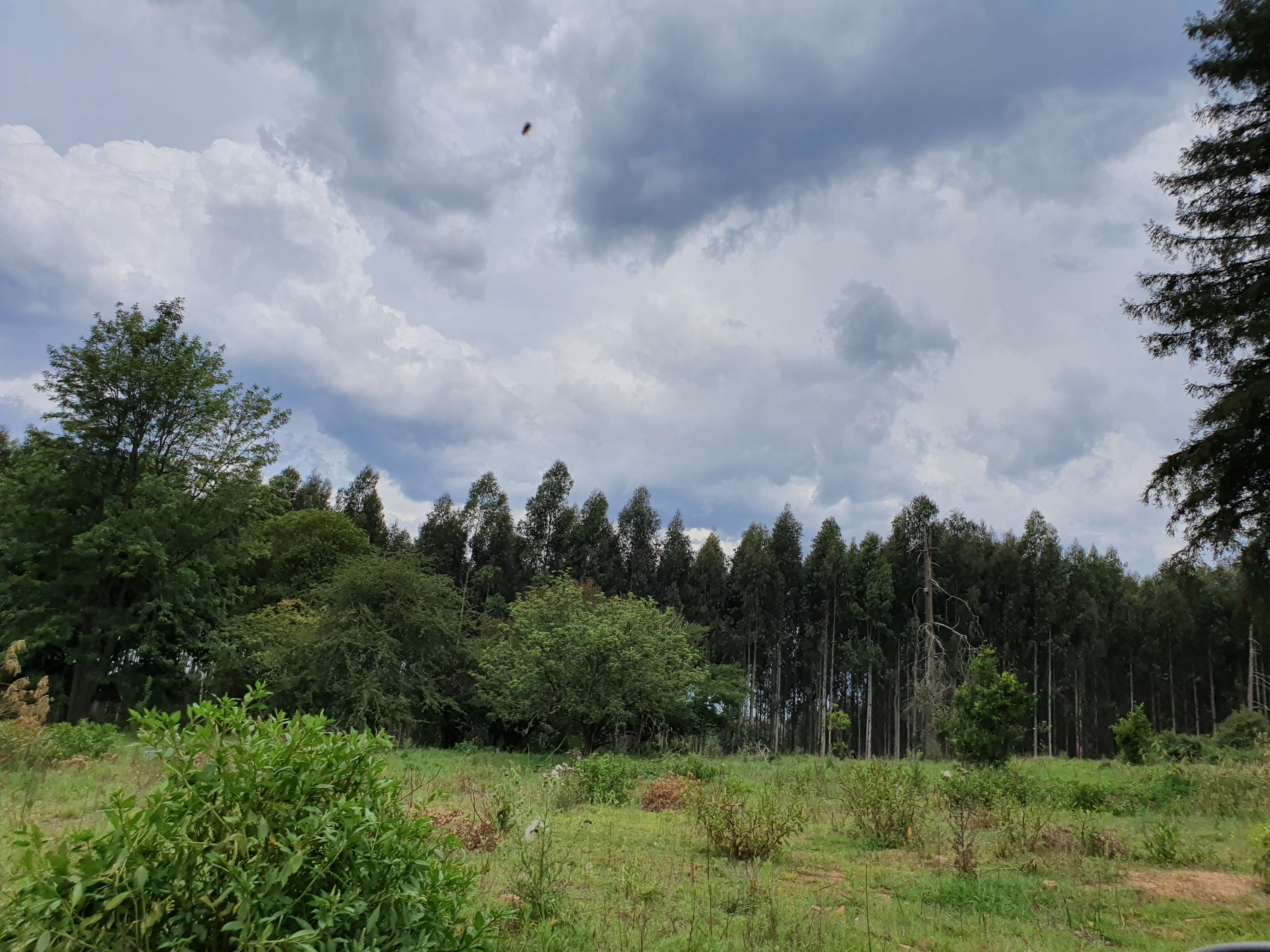
She was nearly 40 and it felt like a lifetime ago that she had driven up the farm road. The smell of coming home still lingered in the air; of eucalyptus trees, pine and wattle. It felt familiar and the memories were flooding in as if it were just yesterday. So much had happened here.
It’s a peculiar feeling of choosing to go back to a place that holds so many memories, a place that represents your childhood; a sacred place because of how it became such a significant part of your identity and how the events that unfolded there would shape the rest of your life.
There is almost an expectation of returning to a place like this, that it should remain unchanged as it has in your mind; how the farmhouse walls stand solid, how the garden is abundant with fruit and flowers, how the smell of home cooked food wafts from your mother’s kitchen on a Friday as you return home from boarding school, how your brother kick starts his new motorbike and disappears down the road in a cloud of dust and how your father steps out of his vehicle, evidently battered by another long week in the workshop and shouts, ‘Come on Jene, let’s go fishing.’
It had been years since Jene had been back to the area that she grew up in and even more years since she had returned to her childhood home and back to the place of the accident. Jene and her partner’s children had driven down to KwaZulu-Natal from Johannesburg to stay with her oldest and dearest school friend, Melinda. She wanted to give her partners young sons a taste of farm life and what it was like to grow up on a forestry estate in the lush KwaZulu-Natal Midlands in a small close-knit farming community. But most of all, Jene needed closure. When she was 15 years old, the life she knew changed forever in a matter of moments and recently she had been thinking about this time and place a lot and of the people who had so generously and lovingly supported her throughout those challenging, life changing years. Though she was not stuck, she wanted to immerse herself in these memories, get close to them, love them and feel the gratitude for everything that is because of what was. She’d go back to Natal for a week and in that time, she’d return to her family homestead and to the very place that she was found face down, falling in and out of consciousness and calling her mother’s name.
Jene sat in the passenger seat and Melinda drove. It didn’t happen often, but that day even Melinda was quiet! They’d decided to leave the children on Melinda’s farm while Melinda and her returned to Colbeck Estate for the first time and for the last time.
They were almost at the top of the hill and very close to the homestead’s entrance. Jene’s anticipation to be back at her childhood home increased with every landmark that they passed. The avenue of old Blue Gum trees stood tall, alluding to the assumption that a place as significant as this, that holds so much history and at one time, so much life – would go unchanged and defy the very passage of time. That it would always be as you remembered.
But it was not like this. Instead Jene returned ‘home,’ to find nothing. That everything that was still so vivid in her mind, no longer exists. Not even a brick. The only thing that remained from her childhood was her favourite tree – a solitary Redwood tree, as magnificent as she had always remembered it.
It was an unusual Redwood tree. Instead of having one solid trunk like most Redwoods, this tree stemmed five branches from the roots. These five branches grew in solidarity, supporting each other through the seasons of life, surviving the weight of heavy snowfall, of wind, of floods and drought. It was a tree that stood the test of time and it was the only tangible thing left of Jene’s past.
She sat on what was the foundation of her childhood home, a patchy green piece of land dotted with brambles and tufts of grass. For a few long moments, the emptiness of the space muted her. It looked like an insignificant field of weeds and grass, seemingly mocking the immensity of her return and of everything that had happened here. Though it was still as beautiful as ever, there was nothing left of her past, other than the memories she held in her head and of course, there was still the great old Redwood.
It swayed and it creaked in the breeze as it always had. Like an old friend, it reminded her of what ‘still is’ and importantly, what came because of ‘what was and because of what happened.’
For a few blissful, heartfelt hours, Jene ‘danced’ in an open field with ‘then and now,’ and everything that she has become.
“Your journey has moulded you for your greater good, and it was exactly what it needed to be. Don’t think you’ve lost time. There is no short-cutting to life. It took each and every situation you have encountered to bring you to the now. And now is right on time.” – Asha Tyson
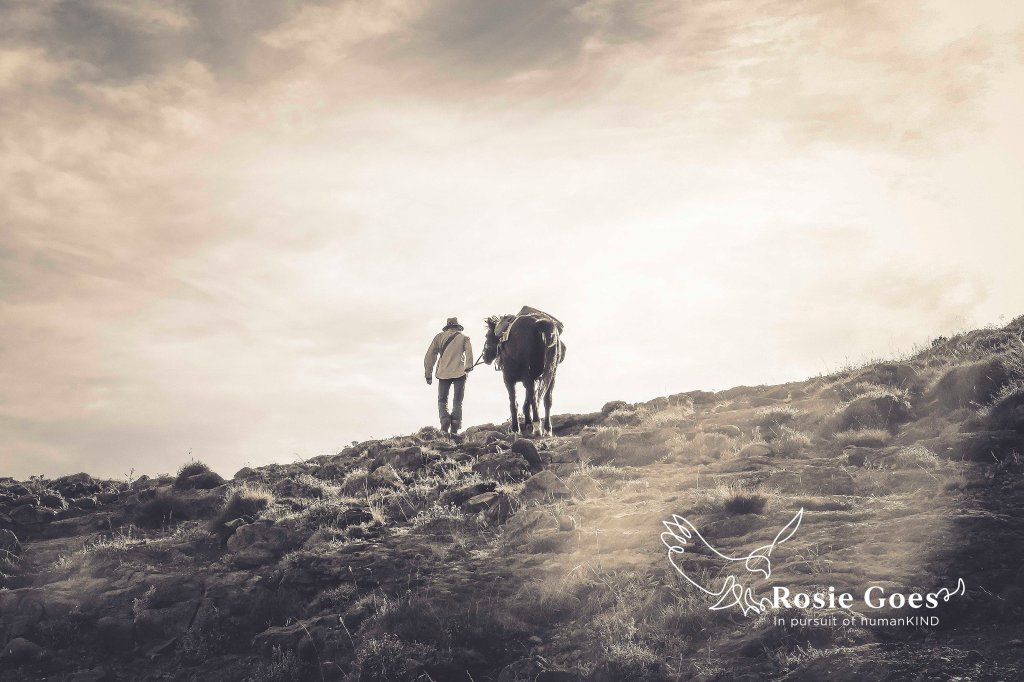
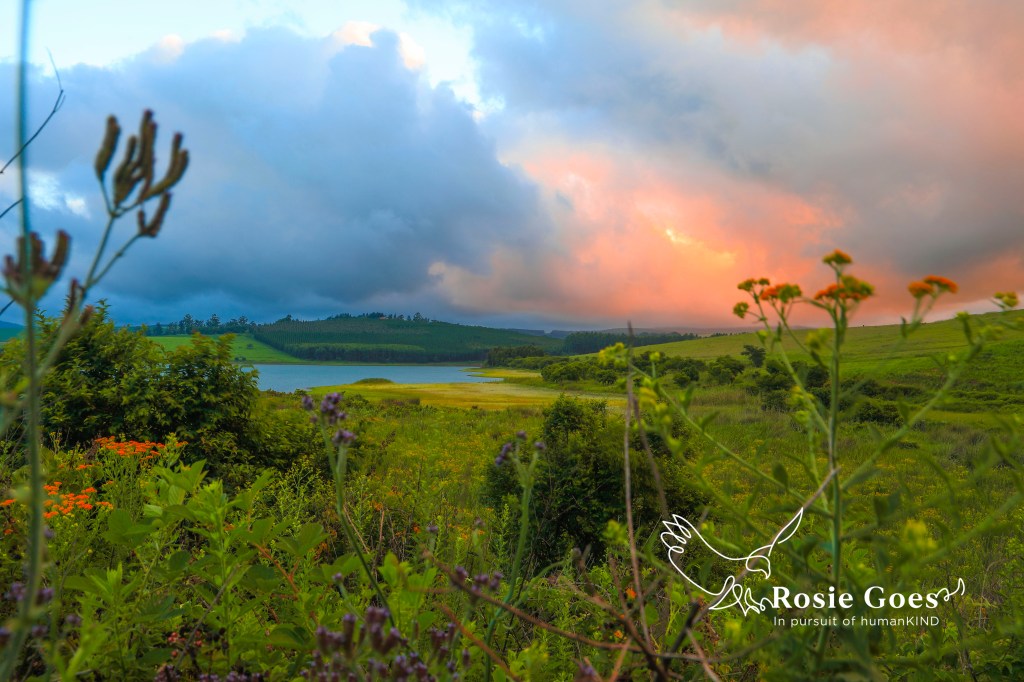
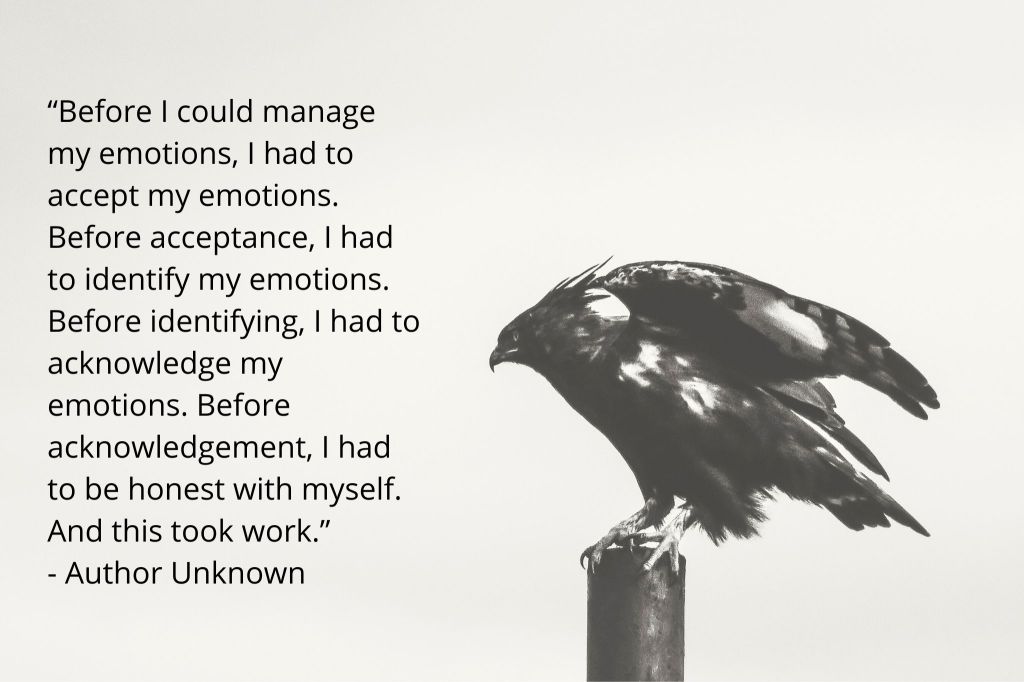
I went for a long walk today. I know the route well. I know every metre of it, I know how the water flows over the road and how every day I wet my shoes in order to get to the other side, how fish dart in all directions with every step I take. I know the long stretch of road across the dam wall, where the wind picks up and blows in the memories, with our river to my right and a silver expanse of water to my left. I hear the fish eagle in the distance and I see my loyal friend, the long crested eagle perched on the telephone pole, always there, always watching. I follow the road that follows the contour of the dam, around the corner and into a secluded valley, a valley bursting with Red hot Pokers and birdlife. Here I am alone but I am not. Here I am immersed in my deepest thoughts and here is where magic happens.
On this walk, sometimes I feel as if I could explode with hope and purpose, sometimes I get clarity, sometimes I feel fierce determination, sometimes I cry, sometimes I laugh, sometimes my heart breaks. But today as I walked this road, I felt acceptance.
Where magic happens…
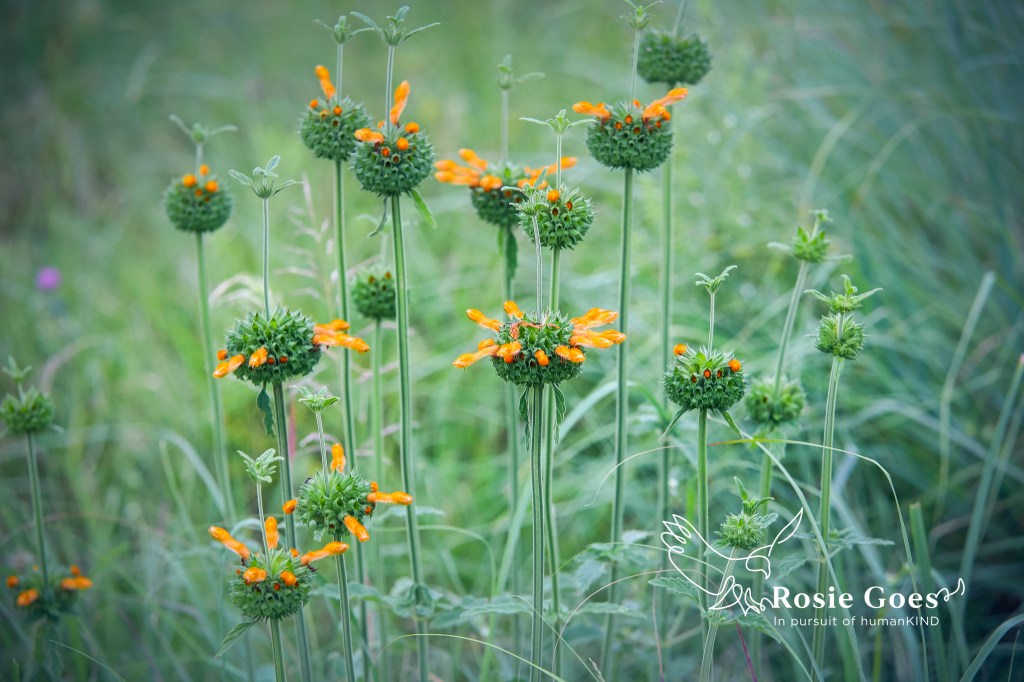
Red Hot Poker
Right from the beginning, before I had even thought of starting Rosie Goes, I knew I’d be going on some sort of a journey, a journey of many roads with many twists and turns, stories and people from all walks of life and from whom I hope to learn from. There will be no free ride. I will walk this walk myself, I will ‘understand’ what I am exploring and I will feel every stone under my shoe, every bump along the road and I will write about it.
Today I felt what it means to accept something or to surrender to it. How before we can hope to start again, we must accept or surrender to where we are at or what is.
Today I learned how accepting something is not about ‘wanting’ something. I learned how acceptance can be letting go of what I’d like to happen for there to be something positive to happen, though not wanting it less or loving it less. To know that to continue as I am, at the expense of myself, of feeling that I am not being true to myself for the sake of a desired outcome, I lose who I am and what is important to me. And I get stuck. I have learned that with acceptance, there is no anger because it is no longer about something else or someone else or about something that happened or about what you don’t have anymore, but simply a deep knowing that you cannot continue as you are for you to feel at peace with yourself and to walk forward in harmony. I have learned that when I am aligned, I become unstuck.
Wild Dagga
Ironically the very first story that I will be writing about with the theme ‘to surrendering to what is before we can hope to move forward,’ is about someone who cannot walk. I will be writing about Jene Frost who was paralysed from the chest downwards at the age of 15 years old. Jene not only walked before her accident, she ran. She ran every day before school. It was her identity, it was her passion, it was her happy place, and it’s how she started her day. But in a matter of minutes, on a lazy social Sunday afternoon, Jene walked her last walk and the life she knew and the future she expected, was changed forever. This is a story about the power of ‘acceptance,’ when it comes to change and starting again, how a young women never let being paralysed stop her from moving forward.





 Rosie Goes
You must be logged in to post a comment.