I didn’t see it coming. An accident that smashes into your frantic life, your hustle, your ‘get up and go’ survival mode – the thing that drives you day after day. Literally, I did not see this coming. In that split second, the moment before the vehicle smashed into us at full speed – the thought arrived: You are going to have an accident now and you may or may not live. Now hold on for your life.
Then everything went black.
Shortly after, I opened my eyes. The old vehicle was dusty – shaken to its core with the collective years of off-road memories now hanging in the air, followed by the realisation: We are alive.
Next up was the step by step process of dealing with an accident and documenting it, all in a hazy state of reality, of processing what had just happened, that there were no serious injuries and above all, no death.
More than not, a major incident such as this potentially comes with consequences, one way or the other. I accept that there is more I will go through. At this point, another wave of fear and thoughts of consequences come rolling in and the next potential reality crashes down, paralysing me with anxiety in its wake. In the meantime, business continues at full throttle. Our restaurant is fully booked for Father’s Day with record numbers. My right hand is fractured and there are plates to carry and drinks to pour. Our customers are blissfully unaware of the events of the weekend and are as supportive as usual of our journey forward. It’s hard but it’s comforting.
Come Sunday evening, frazzled and relieved that this weekend was finally over – I went to sleep and for a few sweet hours, all thoughts and fears vanished in the dark, dusting the black board clean of the weekend’s messy, frantic scribbles.
In the early hours of the morning, before the birds had any inkling of the sun rising and the stars shone bright, I woke. This is my time; in the stillness of the night, at peace and in quiet when my day has not yet started. No distractions, no interruptions – just clear, purposeful thinking. It’s at this time, I find my way forward.
I know this: from the experiences I’ve had in the last few years, I trust that ‘Life has my back.’ I trust that my journey; the good, the bad and the challenges that come our way are designed to grow us and shape us into better, stronger human beings and are for the ‘greater good’ even if I don’t see how at this point. I know this because this has happened over and over again, and often, it’s only far down the road that the picture becomes clear.
At the event of facing something challenging, I have a choice. I can either plug into my fears and the paralysing anxiety and bad, non-aligned decisions that come with it, or into ego and become stuck in my self-righteousness, unable to accept, see clearly, take responsibility or find a way forward. I have a choice to prioritise perspective and to trust that if I am aligned with my higher self, life has my back and that what I am facing is necessary. To ask myself the question, how is this challenging me? What is it about myself that I perhaps have not seen or paid attention to, that needs to heal or for me to get better at? What is this pushing me to do or to face?
Embrace “Amor Fati” – To embrace everything – the good, the bad, the painful as necessary parts of your story. It’s not just acceptance, it’s choosing to love what shaped you. Some things didn’t happen to break you. They happened to build you.
For me, my ‘Amor Fati scenario,’ is that this accident has simplified things. It’s taken away some of the big ‘choices and options’ I had and like it or not, very definitely, has given me one way forward. The choice of how I get there is no longer a decision. And for this, despite the difficult road it might be and whether I like it or not, I am very grateful to know the path I must take. It is a relief just to know and to be able to go forward with purpose, direction and balance.
It sharpens the tool kit and gives me clarity regarding what to prioritize and what to let rest. It forces me to look at how I have been blindly ploughing forward at a frantic pace, solely focusing on succeeding and on the business and in doing so, neglecting other important areas of my life. Those ‘other areas’ are what have caught up on me, demanding I pull out of the race and reassess how I get to the finish line. Life after all, is not a sprint – it’s a marathon and a balancing act that requires perspective and alignment.
I can only focus on the next step right now. I do not know exactly what the lessons to come are. But I trust that by the end of this next chapter, I will be in a better place, the business will be in a better place and I will be better.
Here is a poem that is as much about missing someone and not being able to reassure them of your love, as it is about surrendering to something you cannot control, but loving them anyway.

The Tin Roof

Tin roof with a gaping hole,
What luck do you have today?

The wind is blowing
and a boy is sleeping,
dreaming of better days.

Curled up in a corner,
The wind is threatening rain,
You ache to protect him and to hold him once again.

But the wind is getting stronger,
Oblivious to your pain.
It does not see the child,
It does not see his pain.

It shouts and it threatens and it keeps love at bay.
It huffs and it puffs in support of a cursed name.
It blows, it brings rain, it throws stones of every shame.
Blind to a full story,
The flying monkey in a game.

The boy wakes from his dream
as rain begins to fall.
Cold, wet and alone,
The wind did not bring change,
No change at all.

Tin roof with a gaping hole,
What luck do you have today?

No luck at all, with the wind that howls
and the heavy rain that falls
Only a dream that with time
this boy will stand tall
and will wake one morning,
and hear my call.

And if the nights seem dark,
He’ll look up at the old tin roof,
He’ll see the stars,
He will see the light,
Guardians of the night,
And he’ll know, from deep within,
The infinite love that has always belonged to him.
- By Rosie Goes
As I continue to explore the theme ‘Surrender,’ and it being 3 months since I went to Ukraine, I have finally got time to reflect and write about it. I’ve got to be honest with you. I have struggled writing about my experience in Ukraine because my experience was completely different to what I had expected it would be. It’s taken me some time to understand it; to understand what I did experience versus what I wanted to experience.
When I went to Ukraine, I was faced with some unforeseen challenges that shaped my experience into something completely different to what I had expected it would be. To appreciate it and learn from it, I’ve had to acknowledge how focusing on my expectations and not on what it was, led to some feelings of disappointment, like it was ‘less.’ My expectations were that I would meet and get to know many more Ukrainians than I did. I would spend much more time with them than I did. I would be able to interview them in the way that I normally do. When this did not happen as much as I wanted it to happen, I felt disappointed and frustrated and this blinded me to what my experience really was and the insights and lessons available to me. I had to let go of my expectations for me to see it for what it is and the value in the experience.
Since getting back to South Africa, I’ve also had to get stuck into my photography work. I have been completely focused on my day job (!) which is an agricultural and commercial photographer! Simply put, I’ve needed to replenish the bank account since going to Europe and it’s absorbed me and it’s been necessary! At the same time, I often think of the incredible Ukrainians I met and how I want to tell you about them; how what they are experiencing is real and heart breaking. How tears rolled down an old man’s eyes when I told him that people as far as the southern tip of Africa, are thinking of them, support them and care about what is happening to them.
I need to tell you about my experience in Ukraine, that was neither what I expected nor what you would expect from a photographer and writer going to a warzone. I need to let go of all those expectations and write from the heart and tell you what this time was for me in the way of the Ukrainians I met, the volunteers I met and how this experience has taught me so much about my own life and what I will do (and what I won’t do) in the future. I have come back to South Africa knowing so much more about myself and about how to go forward with Rosie Goes and of course, so much more about the Ukrainians and what they are experiencing.
When I was debating whether to go to Ukraine or not, I asked myself some hard questions. Why would I go to Ukraine? I hardly knew anything about it prior to this war.
I was invited to join a group of volunteers (who are also my incredible friends!) and who were raising funds and delivering food and essential supplies to Ukraine from Germany and the Czech Republic every two weeks on their weekends. Other than that and the news, I honestly knew very little about Ukraine – probably not enough in most people’s minds to go there and experience it during a war.
There were many possible reasons for me to do something like this. Reasons that would justify me going and reasons that would not. Was this trip aligned with Rosie Goes and the theme I am exploring, ‘To surrender.’ Or was it something else? Was it many things? Why would I do such a thing as a South African who knew very little about Ukraine?
Some people have put it down to a midlife crisis. And maybe that’s part of it, although I would not call it a crisis, but rather a massive life change that is aligned with being true to myself and choosing not to live my life in a box that I did not fit. A crisis would also suggest that once I’ve got this trip and experience out of my system, I would come to my senses. I’d remember the plot, and get back in my box! But this is the thing, this is not a once off – this is a way of life I am choosing, one that fulfils me, and gives me a purpose that sets my soul on fire!
Another reason for me going to Ukraine, is literally because I asked for it. I put it out there that I wanted an experience that was ‘out of Africa’ and that would give me insight into the theme ‘surrender/acceptance.’ My ‘out of Africa experience’ came via Facebook a couple weeks later, though at the time, I was not clear how Ukraine was linked to the topic I am exploring.
I was invited to go to Ukraine but I needed to get there within the next couple of weeks. In 2 weeks, I needed to get my finances in order, receive an invitation from the Ukraine government, drive to Joburg and apply for a Ukrainian visa, then apply for a Schengen visa which can take weeks …all in the month of April when South Africa is full up with public holidays and literally shuts down for the month! I decided to go if the ‘seemingly impossible’ happened in the time it needed to happen and if things just flowed! And it did, like magic! I took it as a sign that this is something I should do.
The ultimate decision maker came in the way of a brief interaction with a fuel pump attendant. I had just filled up my tank and was evidently surprised by the price of fuel and the amount I needed to pay. The man looked at me, then said, ‘We should be supporting Russia. If we support what they are doing in Ukraine, we would not be paying these prices.’
I did not react to his comment but it gave me absolute clarity about what I feel strongly about and that Ukraine feels so far away from us and so foreign to us South Africans. It’s easy to make a thoughtless comment that suggests it’s okay for the Russians to kill Ukrainians in a hostile land grab, because we cannot see their faces. It’s easy to make a comment without thinking about what you are really saying and supporting. It’s also easy to turn our heads away from abuse, because it serves us. To side with the bully, and they feed us their crumbs and fool us into thinking it’s loaves of bread, until it happens to you. That day when you are fighting for your life and I turn my head and walk away because it does not serve me to stand up for you.
I realised that I simply had an opportunity that not many others have had, to know more. To put a face to the Ukrainians, and when we are commenting about what to support and what not to support, we see a person.
“Lock up your libraries if you like; but there is no gate, no lock, no bolt that you can set upon the freedom of my mind.” ― Virginia Woolf
In the next couple posts, I will continue to share with you what I did experience and how it’s taught me some more about what it is to surrender to ‘what is’ before we can move forward. How having expectations about how something should be, can stop us seeing what we need to see and not always what we want to see.
It’s taken me a few days to wind down after the last couple weeks and to process the time I was in Ukraine. Soon after I left Ukraine, I felt ready to go home – to be in my own bed, to be around people who speak the same language as me and to simply be in a place that feels familiar. Thankfully I was convinced to stay longer in Europe and to spend some days writing notes and getting clarity on what this time has been and what I have learned through having this experience of going to Ukraine now.
In hindsight, I had expectations of what this trip would be like. I know now that having any expectations at all, was somewhat naive! After all, the only solid plan I had was to get to Ukraine, to interview the internally displaced Ukrainians for 2 days and to fly back to South Africa at the end of the month. There was a big blank space on the timeline and with that, the good possibility that I’d experience many things that I had not expected! Did I ever mention to you that I have mostly been with a group of dedicated Czech and German volunteers squatting in Slovakia and delivering food and supplies across the Slovakian/Ukrainian border post to places in Ukraine that are not being serviced by the bigger NGO’s?!!! To complicate matters, I am an African passport holder and this came with a whole set of unexpected challenges! Let’s just say that the Slovakian border post officials were not that happy about me being there and I was met with long, intent gazes – not the admiring kind! But I will save that for another post!
Before I got to Ukraine, I expected ‘communication’ to be difficult since I only speak English, but I really had no idea to what extent this would challenge me; how I would be heavily dependent on translators to communicate, but would not have them for the most part! That meant that verbal communication was mostly ‘out.’ Instead, I needed to focus and rely on non-verbal communication and to find the unspoken story. I needed to pay attention to the tone in someone’s voice, their gestures, the lines on their face, their hand signals, their expressions, their body language, their actions and the way they choose to spend their time. There were times when I managed just fine, but there were also times that ‘communication’ was urgently needed but just not possible!
Last but not least, I knew that I was going into a war zone but I had no real idea of what to expect. I was ‘green’ as you get. I quickly learned that travelling in a war zone comes with its own set of rules, of things to be aware of and things not to do. Though I did not go to any of the ‘hot zone,’ areas that are under attack or being occupied by Russian forces, there are constant reminders that you are in a country that is being violently invaded and the danger you feel is real. Tensions are high and most Ukrainians are on high alert.
My first day in Ukraine jolted me into reality, that I was actually in a war zone and needed to treat this experience as “someone’ in a war zone, and not as a tourist exploring a new country! Don’t get me wrong, I was already terrified. The fear of the unknown was immense and the friends who had travelled with me to Ukraine, had already crossed the border with a dozen boxes of cats and dogs and were hundreds of miles away from me, on the road back to Germany.
I was alone in Ukraine. A mother of 2, a blogger, a South African who does not speak a stitch of Ukrainian and who was travelling in a war zone with zero friends or connections! It was during those first couple days that I self-diagnosed myself as stark-raving mad, but that kind of thinking did not make me feel better or braver or change the fact that ‘it’s too late baby girl, you’re already in Ukraine. Now put your ‘big girl panties’ on and deal with what you have asked for!’
On my first day there I woke up to the sound of an alarm. Not the usual sounding Samsung alarm that gently nudges me from my slumber and into the new day, but the sound of a ‘missile alarm,’ alerting us of a missile on its way to somewhere in our region and that we should take cover immediately! But where was the damn bomb shelter anyway?
A ‘missile warning’ usually means you have between 5 – 20 minutes before the missile reaches its target. This got me good! I was already a wreck knowing that the night before, it had taken me over half an hour to ask the receptionist via google translate whether I could stay for another night in their accommodation! Did I even have enough time to ask the receptionist this question?!
First lesson: Find out if there is a bomb shelter and if so, where is it?
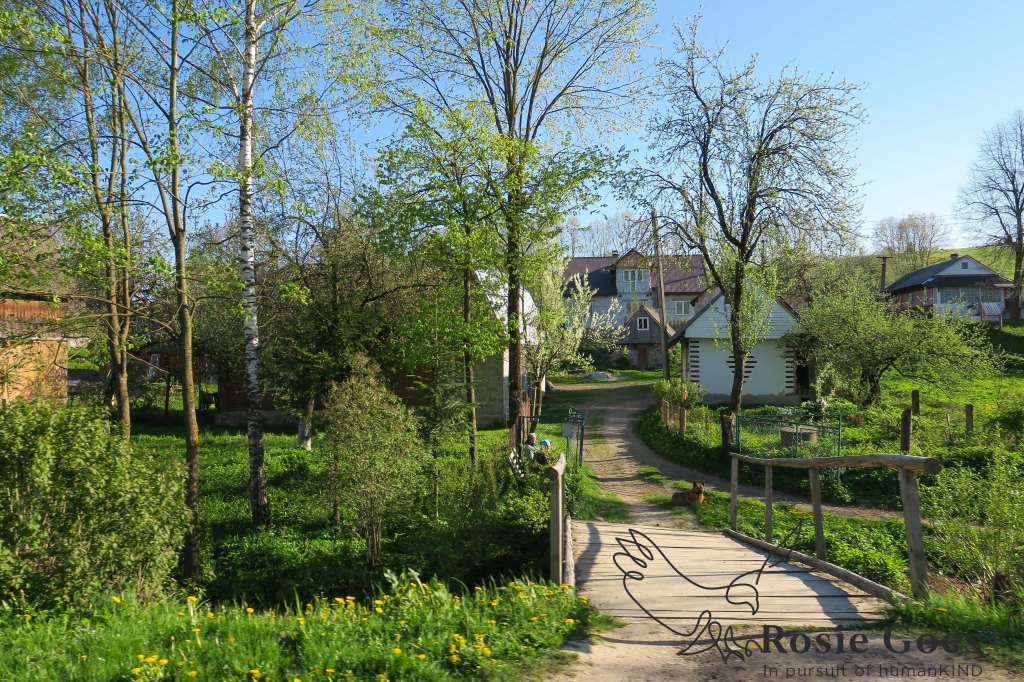
My second big lesson of the day came during an afternoon stroll in the town, when I took a photo of a dandelion, lit in golden light and perfectly positioned in front of an old garden gate that led to a cute match-box Ukrainian-looking house. It was picture perfect and I instinctively lifted up my camera and clicked the shutter button!
At that moment, another alarm went off. It was the voice of a very, very angry sounding woman. I turned around and saw that she was shouting at me while vigorously waving her pointed finger up and down. I did not know what she was saying, but it didn’t take me long to realise that she was unhappy about me taking a photo. I tried to explain to her in English that ‘I mean no harm, that I am just taking a photo of a flower,’ but it fell on deaf ears and her shouting got louder and louder the more I spoke. I decided it was best just to keep quiet, to put my camera away and to continue walking down the street. That’s when I noticed her take out her phone and make a call. I had a bad feeling that this was not the end of it and I was right!
Minutes later, I watched in disbelief as a car came racing up to me at full speed then slammed on breaks in front of me. Two big armed men got out and approached me. They were also very angry. I realized then that these two men were in the military. They started shouting something at me in Ukrainian and I said to them “I’m sorry, I can’t understand you, I can only speak English.”
“Passport,” they shouted. “Give me passport.”
And then I realized, I had left my passport at the ‘accommodation’ and only had a photocopy of my passport! One of the few things I had been told to do, was to always carry my passport with me and I had forgotten the damn thing in my room! I fumbled in my camera bag for the photocopy, noticing how me doing this seemed to make them even more suspicious of me, as if I was about to whip out a gun and start shooting.
I handed them the photocopy, trying hard to stop my hands from shaking. At this point, I think my body clicked into survival mode, I started to breathe very slowly and spoke calmly and clearly ‘that my passport was not with me but I have this.’ I remembered the time I was almost arrested in Mozambique for taking a picture of a statue and how my reaction to the police threatening me, was angry and aggressive and only made the situation worse. I thought to myself, ‘No, don’t be that. Be calm and be friendly.’
They took the photocopy and looked at it and then looked at me as if I was stupid, or the enemy, or an illegal immigrant from Africa – I can’t be sure – and they said, “Get in this car.”
Now I was really scared. I was about to get in the car with 2 armed men, not knowing where they were taking me. I thought to phone a friend, but they were on the other side of the world from me and wouldn’t be able to help even if they wanted to! I thought of sending them a ‘location pin’ of the place I was last at… before she disappeared in a strange car, never to be seen again! Or I could just talk to them, be respectful, smile and be very unthreatening. I realized that that was really my only option! And in that moment, I felt very grateful for almost being arrested in Mozambique and learning what not to do in a situation like this!
I looked at the reflection of the military man in the rearview mirror and smiled nervously at him, then told him “I am now very scared. I have never been arrested before! I think I am going to be the first South African arrested in Ukraine!”
At this this point, something seemed to click and his face relaxed just slightly and he told me, “You, no scared.”
They took me to the military headquarters…which was not so far from the place I was taking photos at. Their extreme and aggressive reaction to me taking photos of a dandelion started to make more sense to me. How strange must it have been for a foreign-looking woman walking towards the military headquarters taking photos of flowers and buildings during a war! For the next hour, I was questioned by someone in the military who could thankfully speak English. They then called the commander-in-chief to interview me too, and to double check that I am who I am – a particularly naive photographer from South Africa genuinely taking photos of a dandelion in a war zone!
I showed them pictures of my kids, my dog and a lion I had spotted in the Kruger National Park in 2020 and invited them all on Safari once the war is over! They seemed to like this and they finally believed that I am who I am and told me not to take photos near the military again. They then offered me coffee and cigarettes. But I declined their offer and told them, ‘No, now what I really need is Vodka!’
Lion in the Kruger National Park
I was relieved beyond words when this arrest was ‘diffused’ and it finally ended with a warning and some laughs! I think it was a good lesson to learn early on and besides, I needed a reality check. I was in a damn warzone, not on tour! Going forward, I would be very, very cautious about taking photos. It was only once I was in the Czech Republic that I dared take a photo of a dandelion again, a whole magnificent field of them!
I also learned that there have been cases of Russians posing as journalists with cameras in hand, walking down the streets as I did and identifying new targets for missiles. With this in mind, I fully understood why things unfolded like they did and I commend the Ukrainian military for taking something like this so seriously and for being so professional about it. I also began to understand the brutality of this war and what the Ukrainians are up against. This is a ruthless war, with every target being intentional, exposing the real reason for this war and not the propaganda Russia would like the world to believe. When buildings that house civilians are targeted, when children are deliberately killed, when busses full of civilians trying to flee the conflict are hit – Putin’s true intention is revealed. Actions speak louder than any words. And the streets are stained with blood.
It was a Summer’s morning in 1963 in the rural region of Donetsk when Alexander took Tatiana’s hand for the first time. He had walked down this road with her and carried her schoolbag since they were 14 years old, through fields of sunflowers, grasslands speckled with wild flowers and a patchwork of green pastures and crops. It was their time to be together; a time to be side by side and to talk and share their news before they reached the fork in the road and would part ways. Alexander attended the Ukrainian language school and Tatiana attended the Russian language school, but for the most part, they shared a road and this is where their love grew into something as solid as the road they walked on.
That early morning, everything was still. The sunflowers on either side of them leaned in, with their sunlit faces turned towards them, listening and watching with curiosity as love unfolded. Alexander had just turned 18 years old. He’d known since the beginning that he wanted to marry Tatiana and he was finally old enough to do so. Alexander took Tatiana’s hand and looked her in the eyes, then said, “I love you, and I want to share every morning with you.”
That day, they walked hand in hand. The birds erupted into joyful song, the breeze picked up and the sunflowers swayed in unison, beaming golden light onto young lovers. Alexander and Tatiana walked together; again and again and again and even now, when their road is wounded with gaping holes, bombed and obliterated and no longer exists.
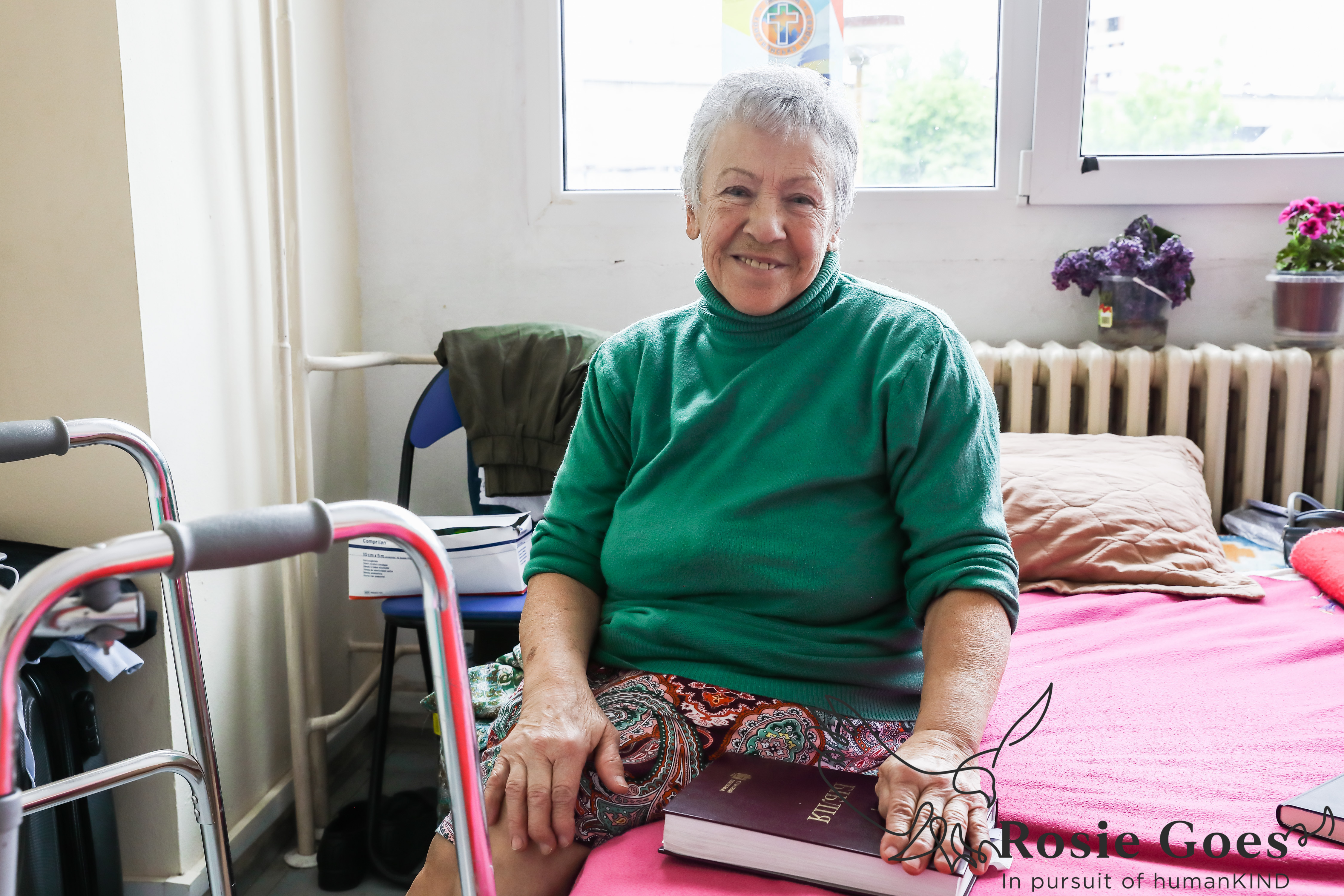
Alexander and Tatiana have been married for 60 years now. It is their 60th anniversary this month and they are spending it alone in a residence for internally displaced Ukrainians, thousands of miles from their children and grandchildren. Two of their children have escaped the war and have managed to get to Europe. Their youngest daughter and her husband remain in the East of Ukraine, running a small business and attempting to carry on with life despite the danger all around them. I joked with Alexander and Tatiana that they are still young and in love, not even 80 yet and Tatiana said “yes, we felt that too until the 24th of February. We felt young, like we have a whole new chapter ahead of us, but we don’t feel that anymore.”
Alexander and Tatiana sat side by side on two school chairs. Their room is a small classroom that has been converted into a temporary residence with mattresses and the few belongings they were able to bring with them. This is not how they envisioned this chapter of their life. They should have been in their new apartment by now, sharing meals with their children and grandchildren and enjoying their retirement.
Alexander and Tatiana
Alexander and Tatiana were hard workers. Both of them had done various work for the coal mines, a life time of using their hands and bodies to make a living. They’d spent their money carefully, taking pride in being able to give their children a good education and to provide for them. When the children had grown up and left ‘home’ to start their own families, Alexander and Tatiana continued to work in the mines and to save their money for retirement. They planned to buy an apartment in Donetsk and to move closer to their family for their retirement years but would need to save up a considerable amount of money to be able to afford this. With calloused hands and tired joints, their needs for ‘retirement’ were simple; a good health, time to rest and to be surrounded by family.
Tatiana
At the beginning of the year, they’d put their small property on the market and had found a buyer. With this money as well as their saved-up money, they bought a new apartment in Donetsk, close to the home of one of their daughters, leaving them with enough money to have a comfortable retirement. It had always been such a solid plan and way of life, when consistency and discipline ‘pays off’ and a life time of hard work is rewarded with a comfortable, stress-free retirement.
But nothing about war is normal. On the 24th of February, the sale was approved and the ‘property documents’ were processed. Alexander and Tatiana were the proud new owners of an apartment in Donetsk. It was also the first day of war in a region that would soon be bombed with missiles, civilians would be gunned down, buildings and roads would be destroyed and Russian invaders would move in, like parasites feeding off what is not theirs, tempted by everything their own country could never give them.
For the most part of this interview with Alexander and Tatiana, Tatiana had done most of the speaking. I watched them both, noticing the loving gestures between them, the way they remained side by side and the way Alexander watched his wife as she spoke, radiant with a deep love for her, his face wrinkled in a way that you know she’d made him smile many times before.
Tatiana spoke of how she wished they could return, how she’d never wish this on any country. Her eyes welled up with longing for the simple life that they had had, one that has been taken away by a man called Putin, a man who plays with the lives of millions, far beyond the borders of Ukraine. A man who claims the world as his battlefield with large supplies of ‘clout’ to threaten and control and an army of tin soldiers; expendable, blood-thirsty pawns in Putin’s bygone game.
Medicine bag
At the sight of his wife’s tears, Alexander stands up and his easy, happy demeanor drains from his body. His eyes become blurred with tears that are heavy with the emotion that he attempts to lock in the cage of his heart, escaping his control in a flood of anger and unbearable pain. He grabs hold of a large plastic bag full up of medicine and holds it up for me to see. He says, “This is all we have. After a life time of hard work, this is what we are left with – a bag of medicine to treat the symptoms of a sick man’s war.”
Alexander’s voice cracks with the injustice of this war, this stupid one-man’s war; pointless and brutal – a war that spews hatred and spreads like liquid poison, leaving a bloody trail of destruction for generations to come, on all sides.
After a few moments, Alexander stops talking about their loss and recomposes himself. He looks me in the eyes and says, ‘We cannot think about tomorrow. We can only think about today. Today we are safe, we have a roof over our head, we have food and we have each other. When bombs are falling, we cannot dream, we can only be here right now, in the company of those we love.’
Olena woke up to the sound of an explosion and the strange sensation of her bed shuddering. It was 5 oclock in the morning when the first missile hit. At first, she did not know what was happening, only that the walls of her apartment were shaking and the windows were vibrating so much that she thought they’d shatter at any moment.
Babooshka
Olena, her mother Olena and her grandmother Tatiana lived together in an apartment close to the Luhansk airport. It was one of the very first attacks by the Russian forces in Ukraine. There were no sirens warning civilians of a missile attack at this point but this would quickly change.
Day broke and after the first explosion, the missiles kept on coming. It was Spring and the usual blue skies that come after a long and cold winter, promising weekends in the park, music, summer picnics and gatherings with friends were grey with plumes of black smoke. The birds that usually sing were quiet, taking refuge from the skies. And tenants poured out of their apartments into the corridors, not to go to work but to seek answers from equally confused and frightened neighbors.
The city of Luhansk was under attack.
Olena and her mother Olena needed to make a decision. Should they stay or go? Should they take the risk and stay by continuing to work and to make a much-needed living, seeking shelter from the bombs at their work place? Or should they do as their neighbours are doing and leave Luhansk by train and head west of the country.
It didn’t take them long to decide. Their elderly mother Tatiana could not be left alone in the apartment building at a time like this. She has a hearing problem and cannot hear any sirens and she would not be able to move fast enough to the bomb shelter should there be a siren ‘warning’ them of an approaching missile. A siren is a ‘warning’ that there is a missile making its way in your direction and that it could hit its target any time between 5 and 20 minutes from the time it goes off.
With this in mind, they felt they did not have much choice but to pack a small bag with their important documents and take the train west. The three of them were fortunate in that a group of volunteers were operating in their area and could assist them with getting Tatiana to the train station and onto the train. This has been a big problem in Ukraine in that many of the people who have stayed in the targeted areas have stayed not because they want to, but because they simply do not have the ability to leave. Many of these vulnerable people who have stayed are either staying to continue earning a living because they do not have the financial means to leave, or they are the ‘elderly or disabled’ and do not have the ability to move. And sometimes, it’s simply that the thought of ‘upping and leaving’ what they know, is equally frightening as the missiles streaking across the skies.
“There is no flag large enough to cover the shame of killing innocent people.” ― Howard Zinn
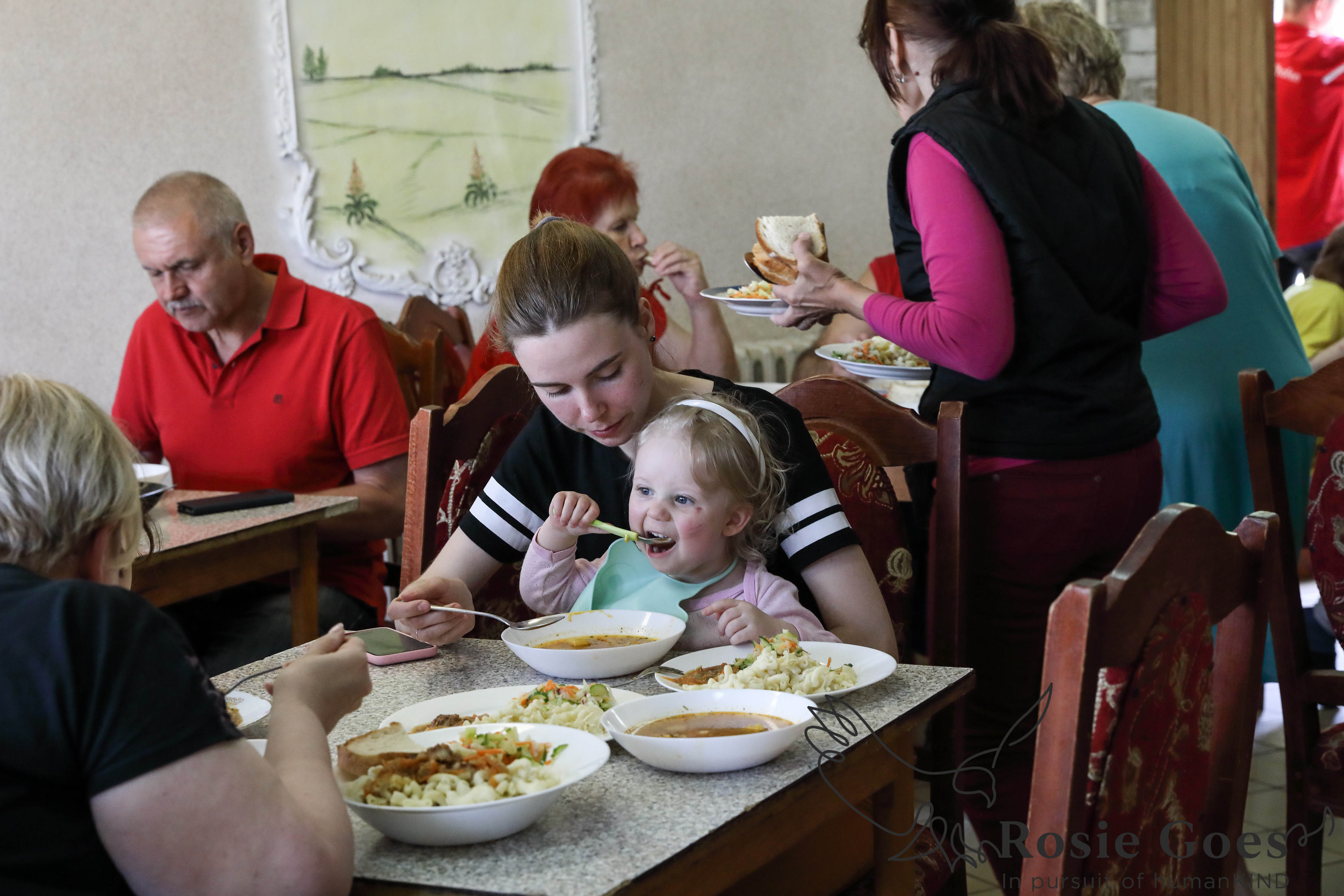
When I asked Olena about her journey and what her experience has been up until ‘now,’ her eyes filled up with tears. She spoke about the immense gratitude she has felt during this time, how they have been given a room for the three of them to live in with mattresses, blankets, clothing, toiletries, food and even access to a therapist – everything they could possibly need in a crisis like this. She told me how deeply moved they have been by the abundant flow of kindness and thoughtfulness shown by strangers in their time of need and when their future feels so uncertain. How this ‘kindness’ they have experienced is food for the soul and is passed on from one person to another; a chain reaction that connects, sustains and builds unity and strength for a population of people in crisis.
For me, this has been one of the most powerful lessons I have learned so far while being in Ukraine. There is a culture of kindness and respect here. It runs through the veins of Ukrainians, of volunteers, of people on the other side of the world who care and who have donated everything from clothes, to wheel chairs, to nappies and to food, to the stranger at the train station taking Tatiana’s hand and helping her on board. This kindness is the life blood that flows and that keeps Ukrainians strong and alive.
I’m learning that despite the worst of humanity being in the spotlight, it is also a time when we see humanity at its best and how powerful it is, how it prevails. How what we give out, counts. How our actions are a ‘ripple’ that go on and on, that feeds into a culture and that becomes our experience.
I looked around at the three women’s new living space and how they have made a small home away from home with the few things they brought with them and with the generous donations they have received from the global community. I notice a family picture frame and a bowl of apples on the table – a picture of normality in a very unusual setting. I notice a plastic blue toy cow placed on the shelf, taking its position next to the family photo frame and a religious picture that they had cut out from a magazine. These 3 objects represent everything that truly matters to them right now. Their family, their beliefs and ‘love’ shown in the way of kindness and giving.
3 generations
I asked Olena about the toy cow and she took it from the shelf and explained that it was a gift from a stranger. That a volunteer had given it to her to cheer her up. And then she passed it to me and insisted I take it with me to remember this time. She then picked up all the apples in the apple bowl and a chocolate croissant and gave that to me too.
This was my first experience with the Ukrainians and I was deeply moved. Initially I felt uncomfortable about receiving this gift as I felt they needed it more than I did. But my interpreter thankfully insisted I take it, and I did. She explained to me that this is what the Ukrainians do, they show their appreciation by ‘gifting’ you however they can. How ‘gifting’ is their way of saying, ‘you matter’ and a way for them to connect with you.
Right now, the blue cow sits on my desk in front of me and I think about ‘giving and receiving.’ How it is the simple but powerful act of saying ‘you matter,’ and how receiving is also the ‘act’ of giving someone a voice, of accepting and receiving what they want to say or how they want you to feel. I have learned how the act of ‘giving and receiving’ goes hand in hand and creates an intangible ‘ripple’ that goes from one person to the next, until it becomes a torrent – unstoppable and stronger than what is unfolding on the ground. The beauty of ‘giving and receiving’ is not about the gift itself, but rather the love and intention behind it. How ‘giving and receiving’ is a mutual exchange of love.
I see this in Ukraine; how a culture starts with you and me and how an act of kindness goes from one person to another, rippling further than we will ever get to see. I see how this culture of ‘giving and receiving’ brings people together, creating strength and unity – how an intangible act of kindness is more powerful than any ‘missile’ can be ever be.
Giving and receiving – an exchange of love
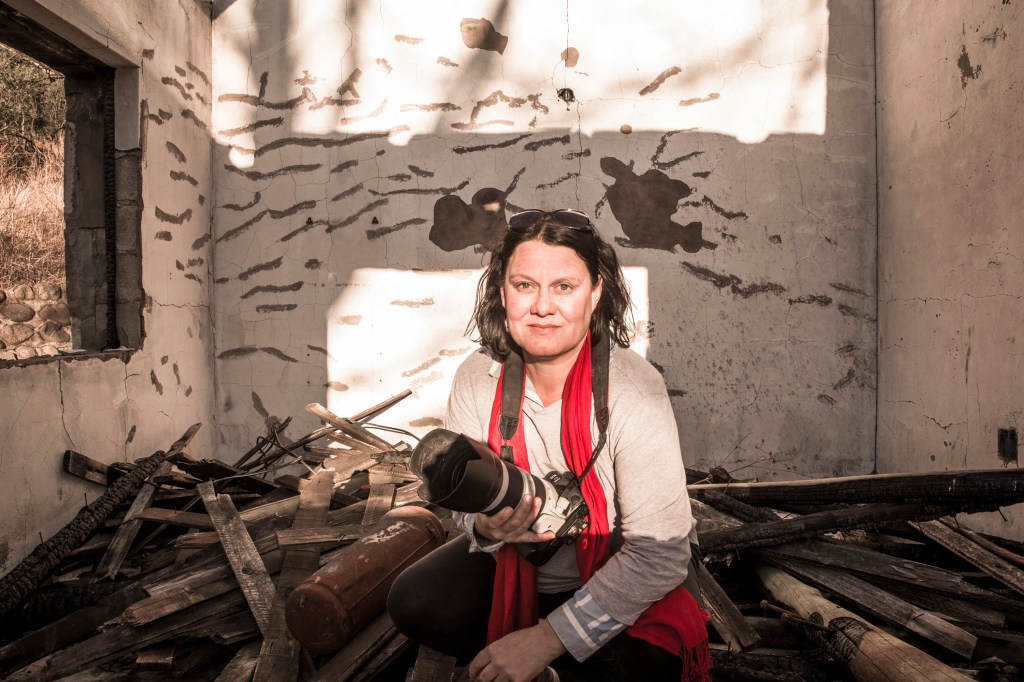
Lianne Ashton is the author and photographer for Rosie Goes. She is a freelance photographer and writer currently based in Ukraine and neighbouring countries.
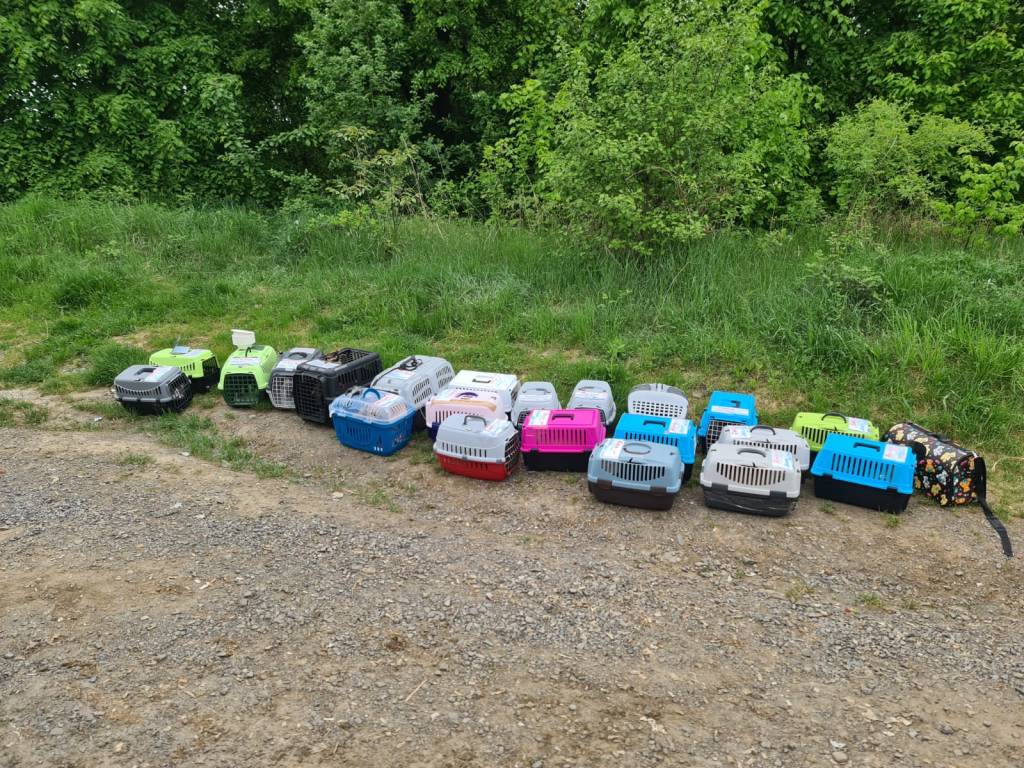
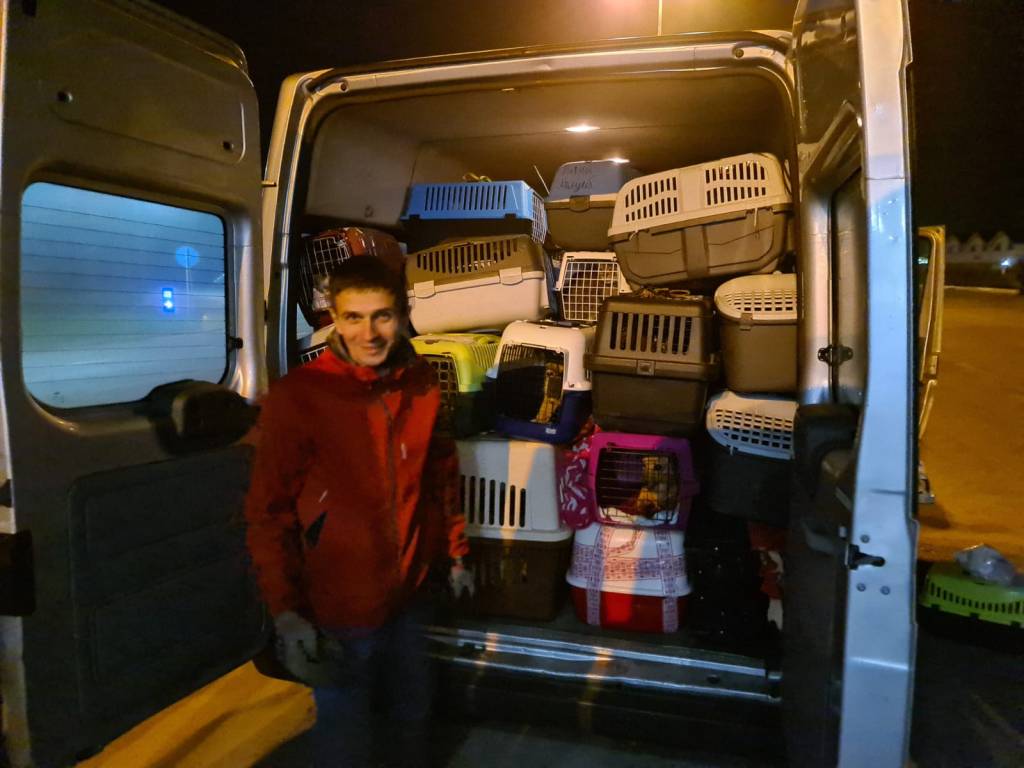
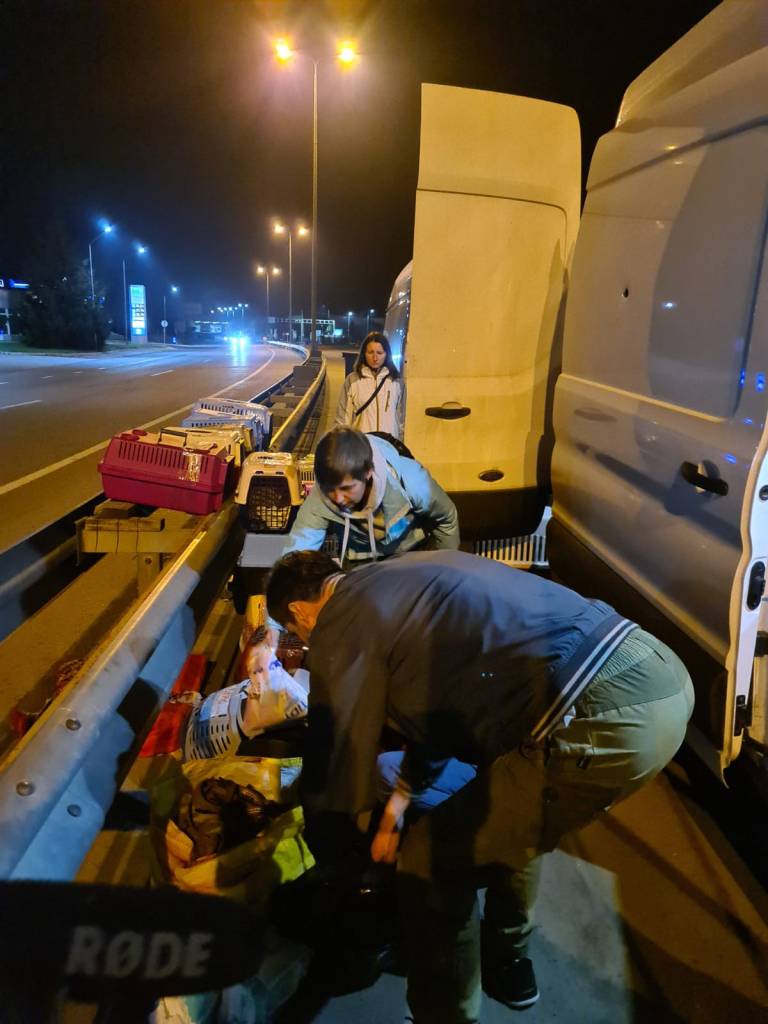
After a very long wait at the border, Daniel, Patrik and crew were finally on their way with 27 dogs and cats on board! When it comes to reuniting dogs and cats with their Ukrainian owners outside of Ukraine or finding new homes for war-related abandoned animals, (outside of Ukraine) the challenges are endless. Firstly, one person is limited to 5 animals when crossing the border. This means volunteers were necessary for Daniel and Patrik to get the total number of 47 animals across the border and that would give them enough time to drive the long trip home and to be home by Monday morning in time for their regular jobs.
But a border crossing is most often never simple, regardless of where you are! No matter what good intentions you have, there is a long list of ‘can-do’s and cannot-do’s’ that we are all expected to know, but don’t! Daniel and Patrik used the Ubla/Slovakian border post which is by no way going to be a quick and casual border crossing. I know from my own experience, having had to wait while the Slovakian border officials assessed my ‘strange and very foreign’ African passport for over an hour with various officials poking their head around the corner to have a look at me! They certainly take their job seriously which I suppose is necessary, especially in times like these. But it can be quite intimidating at times and it certainly does not happen quickly.
Daniel, Patrik and crew only managed to get 27 out of 47 dogs and cats across the border. They were delayed by 19 hours for a number of reasons, including waiting for the animals to be approved for border crossing and not enough volunteers to help with taking 5 animals each. It was a difficult decision to make, but they had to make the decision to leave the animals that were not yet through. They still had a 15 – 20 hour drive back home and needed to be back at work by Monday. Time was now of essence. This would have been very difficult news to break to some of the Ukrainians hoping to be reunited with their animals.
Ready for loading…
Waiting for dogs and cats to cross border
Many of these animals from Ukraine are as traumatized as their humans are. With the constant bombardment of missiles, of explosions, of shattering shards of window glass, with walls that shake and shudder – it is a truly terrifying world to be in. If I think of how animals behave on Guy Fawkes Day and New Years Eve with a few fireworks here and there, I cannot even begin to imagine their state of being during a war like this. Regarding the pets, many of them are traumatised, some on edge and aggressive and some becoming more and more reclusive, overwhelmed and alone – in a state of shock.
Though I know this would have been difficult for Daniel and Patrik to return with less animals than what they wanted to return with, they did return with 27 animals. I imagine that these are some of the very difficult decisions people are forced to make during war; who to take and who to leave behind.
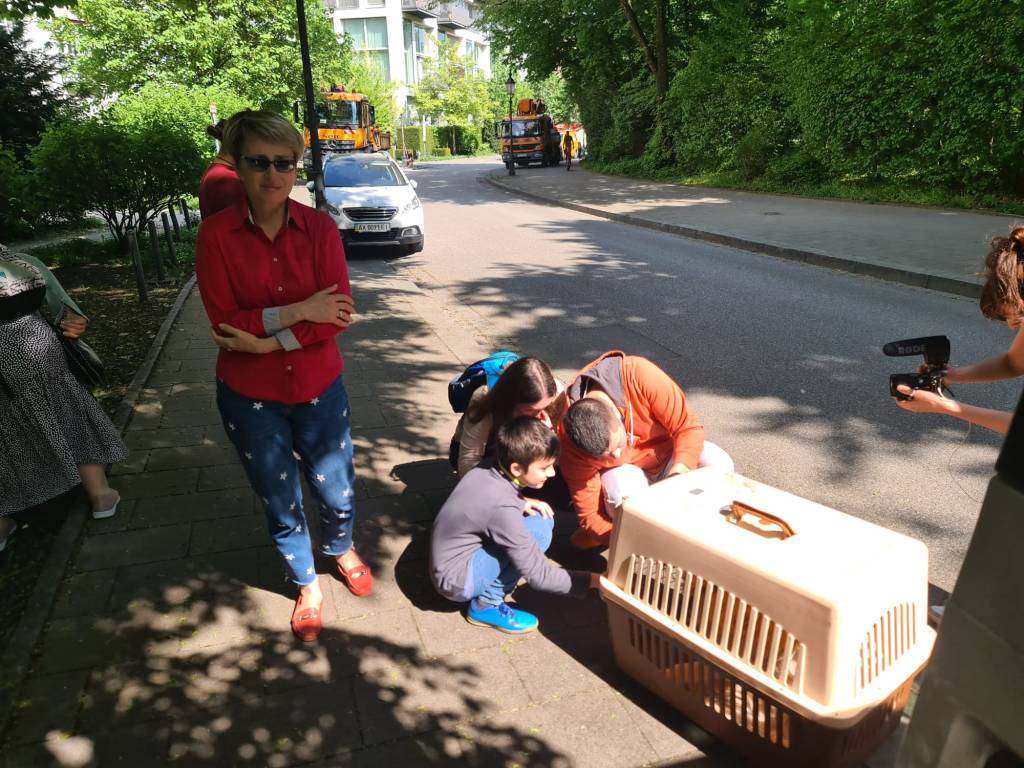
The vehicle arrived at the designated meeting place and the doors of the van were finally opened, with light flooding in and the sound of familiar voices – the sound of their humans! Daniel describes the incredible few minutes of witnessing these animals that have been in a severely depressed state, of them hearing their owners voices for the first time and the realization that comes over them like a tidal wave of emotion, that they are not alone and not abandoned, they have been found.
And this is my favourite! I would love to have been here to witness this myself, but I can imagine these moments of pure joy to be reunited after such a terrifying experience. Something very good to happen in a time of such uncertainty, change and grief. These are the moments that keep them going!
Home is where your heart is…
Daniel and Patrik will be making another trip to Ukraine next month. They will be using the money donated to buy food and essentials for the Ukrainians. Please continue to support the Ukrainians, this is a long haul and they need our support. Soon, I will be sharing some stories and experiences of the Ukrainian refugees I have met and exactly how the global community and volunteers have helped them and how this support must continue for them to carry on as they have.
Lianne Ashton is the author and photographer for Rosie Goes. She is a freelance photographer and writer currently based in Ukraine and neighbouring countries.
This mission is no ordinary mission. Other than transporting food and essentials to refugees in Ukraine, the plan for this trip is to bring back a total of 40 cats and dogs and to reunite some of them with their Ukrainian owners who are currently based in Germany and to find new homes for the rest of them. It will take them a minimum of 17 hours to drive back to Germany with these animals, no easy task by any means.
*Anna who is one of the Ukrainians hoping to be reunited with her dog and her cat, has offered to join us on this trip and to go back to Ukraine. Her and her family recently fled the terror unfolding in Kharkiv and have been staying in Germany for the time being. She is not only determined to bring her own animals back but she understands how Daniel, Patrik and Mimi will need help doing this, especially since Patrik lives in the Czech Republic and Daniel and his girlfriend who is a videographer will still need to travel another 600 kilometers further to get to Munich. They could certainly do with the extra hands of handling 40 dogs and cats on a 17 hour car trip.
It’s now just after midnight and we have arrived in Ukraine. Soon I will be on my own. The plan is to drop all the food supplies off with the Chop Municipality, drop me off at a hotel, collect 40 dogs and cats and for them to be on their way back ‘home.’
This has been my choice all along. I could either make this a very short experience and go back with them on this trip or I could stay and make my own way back to Munich in time for my flight back home. I could follow through with my plan to meet individual Ukrainians, hear their stories; about their life before the 24th February 2022, their experiences of the war, of leaving the life they know and not knowing if there will be anything to come back to. Of escaping terror and making decisions about what to take and what to leave and what is really important and what is not? How did they get here, what was their journey like? How have they coped with the temporary life they are stuck in, how do they cope with the atrocities they have witnessed and experienced, will they go back if they can? Is there anything left to go back to? This is what I would like to know and what I’d like to share with you in the coming weeks.
I have no real plan, other than to be here and to go with the flow. I will meet many people along the way and see where this takes me, with my intention being that I’d like you to discover the story of war and the very people experiencing it. I want you to come on this journey with me, and feel close to it, even if you are on the other side of the world. I want you to get to know the Ukrainians and who they are. I want you to know war.
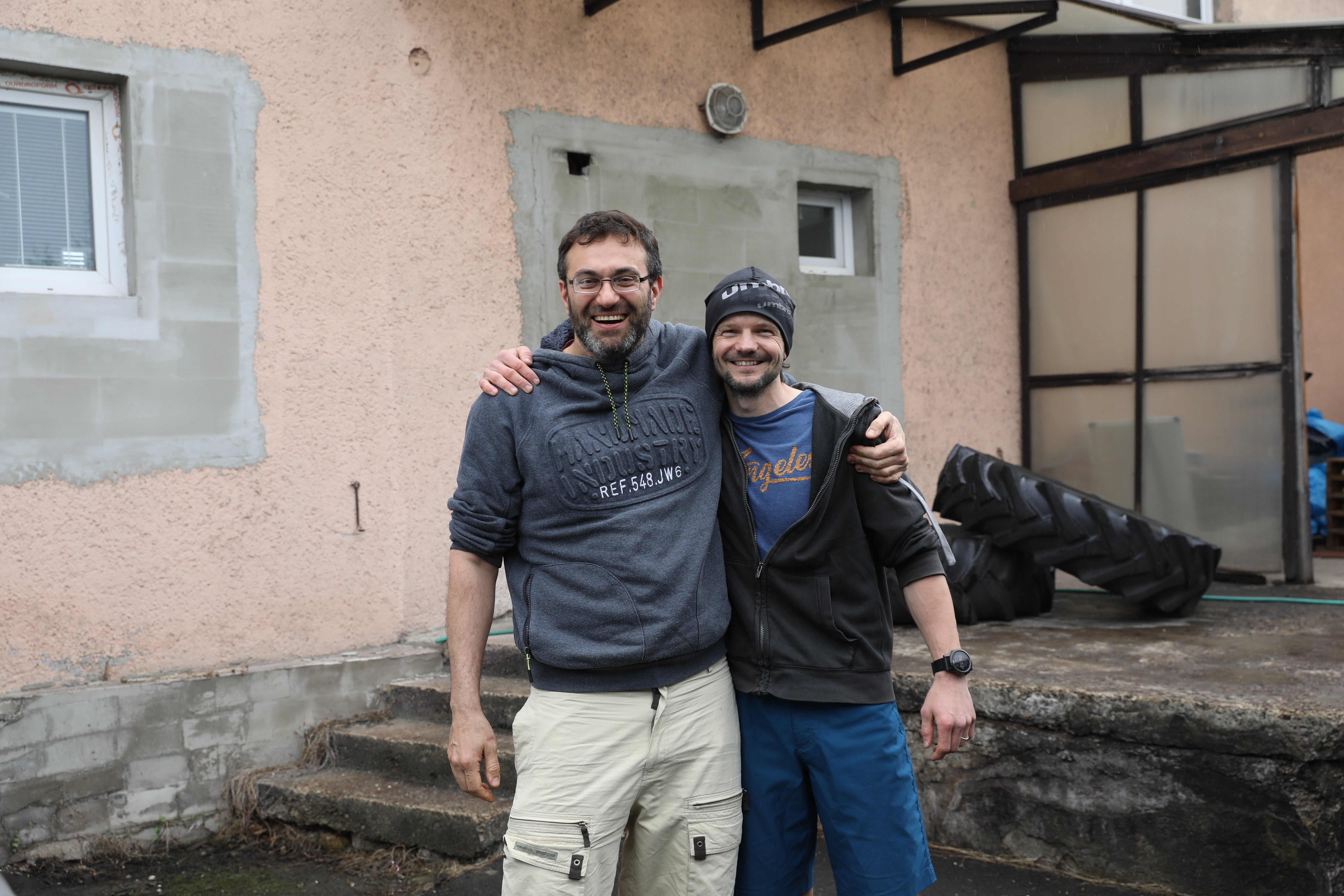
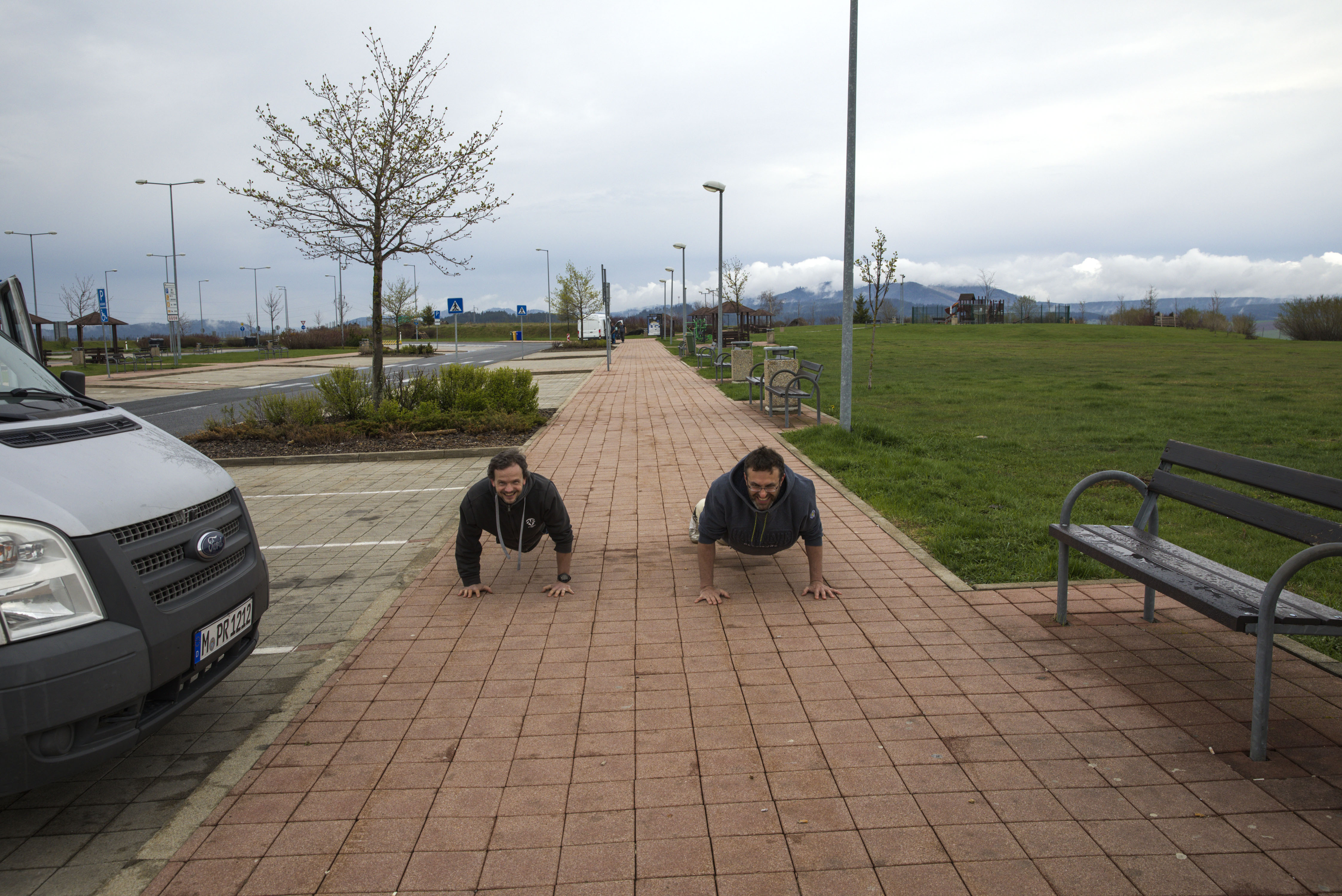
It’s an emotional goodbye for all of us. In the space of 48 hours, we have gotten to know each other and have become friends. It’s quite remarkable how in a short space of time, friendship comes easy despite our different backgrounds. We all have one thing in common, to support Ukraine in whichever way can. Each of us has the ability to do that in our own way, but ‘this minivan,’ is how we’d get there! We are a group of 5. One Israeli who spent much of his childhood in Russia, a Czech fitness specialist, a Dutch videographer, a Ukrainian refugee and a South African.
Anna who speaks little English, has been telling us her story and experiences of the war so far. She is from the city of Kharkiv and speaks Russian. Daniel has been translating for us. It is the first story of many to come.
I notice how she is well presented, dressed smartly and has applied make up and jewelry. She sits in the front staring hard at the road ahead, holding back the emotion bubbling inside her, the fear and uncertainty of what is still to come. She has just received news from the people who have been caring for her dog and her cat, that her cat has gone missing and will not be leaving Ukraine with her. Here begins a story of ‘separation.’ Of being separated from the people (and pets) you love and the fear of not seeing them again. Her husband who is not of Ukraine nationality is stuck in the Eastern parts of Ukraine, unable to get to Anna and their young children. Her beloved cat has disappeared into the rubble of Kharkiv, traumatized and shaken by the constant bombardment of missiles. And then there is her sister and her sister’s family who lived near Mariupol. Anna’s words start to tumble out now, speaking faster and faster as the emotion inside her wells up, and cracks.
She does not know where they are, only that they have been taken to Russia.
Anna’s sister and sister’s family were meant to meet them on the way to Germany. But they never arrived. They waited 3 days for them and eventually had to make the very difficult decision to continue on without them. 3 weeks prior to this, she had spoken to her sister on the phone to find out how she was. She had been emotional and frightened at the time, traumatized by constant explosions and sounds of war and never knowing from which direction danger will come from next. There small community had been surrounded by Russian forces, spreading like liquid poison, seeping into every crack and crevice and destroying everything they come into contact with.
“I want to die, I can’t do this anymore, this is too much,” cried Anna’s sister.
“Then come with us” said Anna, “come with us to Europe. We will wait for you.”
But they never arrived. Anna and her children made the decision to continue on with their journey.
They did not hear from her sister for another 3 weeks. All communication in that area had been cut and calls are no longer possible. The silence was heavy, with fears of whether they are safe and whether they are even still alive.
Eventually that call came, and though it was a huge relief to know that her sister and her family are still alive, the news was not good.
They had been found and captured by the Russians and had been made to march through forests and fields of landmines. They were then loaded onto a train, among many others at gunpoint and taken to Russia. It is from Russia that her sister called Anna to tell her what had happened and that they are no longer in Ukraine. The group of people who had been on the train with them were not with them anymore. They have all been sent to different locations so that they cannot communicate with each other. Her sister was vague with information, knowing that the call was being closely monitored and that she cannot give any information about her location or what is being planned for these Ukrainians or what is happening to them.
Listening to Anna, I soon realized how this trip was so much more than just fetching her pet/s. In a time of war, your human rights are lost, you become dispensable and you are one of thousands experiencing the trauma and terror of war. Where fairness and justice does not exist, where you live in fear from hour to hour and day to day. And you know that you and your family are just a number in the eyes of the enemy, that nothing can be done. And when it comes to your loved ones, you are often powerless when it comes to saving or helping them.
But this is the extraordinary thing I am discovering about Ukrainians. There are small victories everywhere by the way they are focusing on what they still can do and what can never be taken from them. Their human rights may have been violated, but ‘who they are’ as people is strong and is the very medicine that keeps them sane, that keeps them from falling apart, that allows them to nurture and care for one another through this time of crisis.
I realized that Anna was doing this; she was empowering herself by doing what she still can do. She may not be able to help her sister right now, but she can help her pets and other Ukrainian’s pets. She can help make a reunion possible and bring some joy to a few fellow Ukrainians in a dire situation. She can still do something, and she is fiercely and lovingly doing it. This, I am quickly discovering, is the spirit of Ukrainians.
This is Daniel doing his thing! This is a project that takes a fair bit of coordinating, planning and importantly, raising funds to purchase and transport food and essential supplies through to Ukraine for some of the thousands of displaced Ukrainians. This project is a private project that was initiated by a pair of friends who simply wanted to get involved and help. It seems strange that in a time of crisis and war, when our humanity is under direct attack – that it claws its way out through the cracks and grows bit by bit through acts of kindness and support from strangers, how it gives life to unity and belonging. How all our differences become completely irrelevant in a time of war, and instead our shared humanity brings us together and brings us strength in the darkest of times. This is when despite the destruction, fear and uncertaintity that prevails, our human spirit grows and gets stronger and carries us through…
Rosie Goes…
Please support Daniel and Patrik’s Go Fund me account for the next trip into Ukraine. This weekend I’m joining them. We are leaving tonight and will arrive in Ukraine late tomorrow evening. Tonight we drive to the Czech Republic where we will do the shopping for this trip. We will also pick up Patrik. Then we drive through Slovakia and into Ukraine, arriving very late on a Saturday night. The great news is that the curfew has been lifted from 11pm to 5pm to no curfew. This will take some of the pressure off to get there quickly. From there, I will be staying in Ukraine but Daniel, Patrik and a few others will be transporting 40 dogs and cats back to Germany where they will be reunited with their Ukrainian owners. Watch this space!
It’s all really starting to feel real! I have no idea what to expect but I know that it will affect me deeply. I am going to keep you updated as much as possible and will hopefully help bring Ukraine and what the Ukrainians are experiencing closer to home. Please share this with anyone you think may be interested in following this journey. Your support is a great help!
And last but not least, let’s help Daniel and Patrik fill the mini man! Here is their Go Fund Me account.
If someone had told me 3 weeks ago that I would soon be boarding a plane and heading North to Ukraine, I’d probably laugh. But that’s it, I’m not going to laugh anymore because I am discovering that since starting Rosie Goes – the most incredulous things happen at exactly the right time, taking me on a journey with a very definite purpose – in pursuit of humanKIND.
A few weeks ago, ‘I put it out there,’ (asked the universe, prayed…what ever is right for you) that I would like an opportunity that is aligned with Rosie Goes and that will help me kickstart this project. My answer came via Facebook! I casually commented on the post of a couple friends in Europe who have started up a Go Fund Me account and a project for refugees in Ukraine. For 2 weeks, these guys collect donations from the likes of you and I, or anyone who wants to help the Ukrainians, then go on a ‘mad’ shopping trip in Germany or where ever, packing the mini van to the hilt with everything and anything.
Just an interesting, random fact – there are limits on the amount of sugar you can buy in a supermarket in both Germany and Hungary, between 2 and 10kg’s but in the Czech Republic, there seems to be no limit…all these factors influence the route they choose to take into Ukraine. The list varies every week and it includes everything from cell phone chargers to body bags. The list alone tells a story. It tells us a story of grave danger, of packing in a panic. Of leaving things like a cell phone charger…which for many of us, is the very first thing we pack, something we absolutely cannot do without! But these people only had one thing in mind – to get away. To get their family; their children, their parents, their wives and their friends away from the terror unfolding on their doorstep.
Ironically, the theme I am exploring right now is ‘Surrendering to what is before you can move forward.’ And ‘surrendering’ is not a word I would choose when talking to the Ukrainians about what I am exploring and writing about. I’m going into war zone, not a ‘surrender’ site. But that’s it, ‘surrendering’ is not giving up.
For me this process of getting to the point of getting on a plane and ‘going,’ has been the most incredible example of ‘surrendering’ to what is. I have simply followed what I have learned so far on this journey. If you keep on hitting a brick wall, it is a sure sign that you are going in the wrong direction. When there is ‘resistance,’ there is not acceptance and things will keep on going wrong or a ‘negative narrative’ born in the past that starts to look like a negative pattern in your life, continues to be proven right -such as ‘nothing ever goes right for me,’ or ‘I’m not good enough for this,’ or consistently blaming others for where you are today, or not where you are. All this points to us not being aligned with our true self and ‘resisting the flow,’ opposed to going with the ‘flow.’
For this Ukraine experience to happen, I have completely ‘surrendered’ to it. I said to myself that I will do everything that I can do to make it happen. I will give it my best shot and commit to it…and I will go if I am meant to go. It was quite unlikely at first, to be honest. I had to get a Ukrainian visa first, and then a Schengen Visa which on average takes a few weeks to get. And to get these 2 visas’, I needed to get an official invite from the Ukrainian government first, I needed finances, insurance and whole lot to fall into place on the ‘home front’ for this to be possible. To add to the challenge, there are umpteen public holidays in South Africa in the month of April and so even less time to get it all done in time for the next trip into Ukraine.
But it has all happened in time. Not without an effort, but it certainly has happened. I am here, about to board a plane and go to Ukraine. I have surrendered to what ever ‘flows,’ paid attention to the timing of things and have connected with people a long the way who ultimately have helped me forward and get to this point.
I am feeling a lot of gratitude right now…and purpose.
I will be updating this site regularly and from here on I hope to take you on a journey into Ukraine, a journey that will make what is happening in Ukraine feel closer, feel real and on a journey that you will get to know the Ukrainians as individuals.
On that note, I must swig back this cup of coffee and get on my way! It’s time to get moving with Rosie Goes, in pursuit of humankind!
Next up:
Daniel will be transporting a dozen cats and dogs to Munich to be reunited with their owners. Update from Daniel below.
“We are going on the 7th-8th of May to Chop (Ukraine) with humanitarian help (food and other supplies).
This time, there is an additional mission:
Anna contacted me to help bring ten dogs and ten cats to their owners that are already in Munich.
The back story is that many people have left and did not have the chance to take their animals with them.
Many of these animals are in contested areas or temporary shelters.
Volunteers are collecting them on the Ukrainian side, then under the coordination of Nadya, bringing them to the border. We will meet with those volunteers and then deliver the cats and dogs to their owners in Munich.
Challenge accepted (although I am slightly scared).
Thank you all for your support!
Your donations are of immense help in making it happen.”






















 Rosie Goes
You must be logged in to post a comment.